
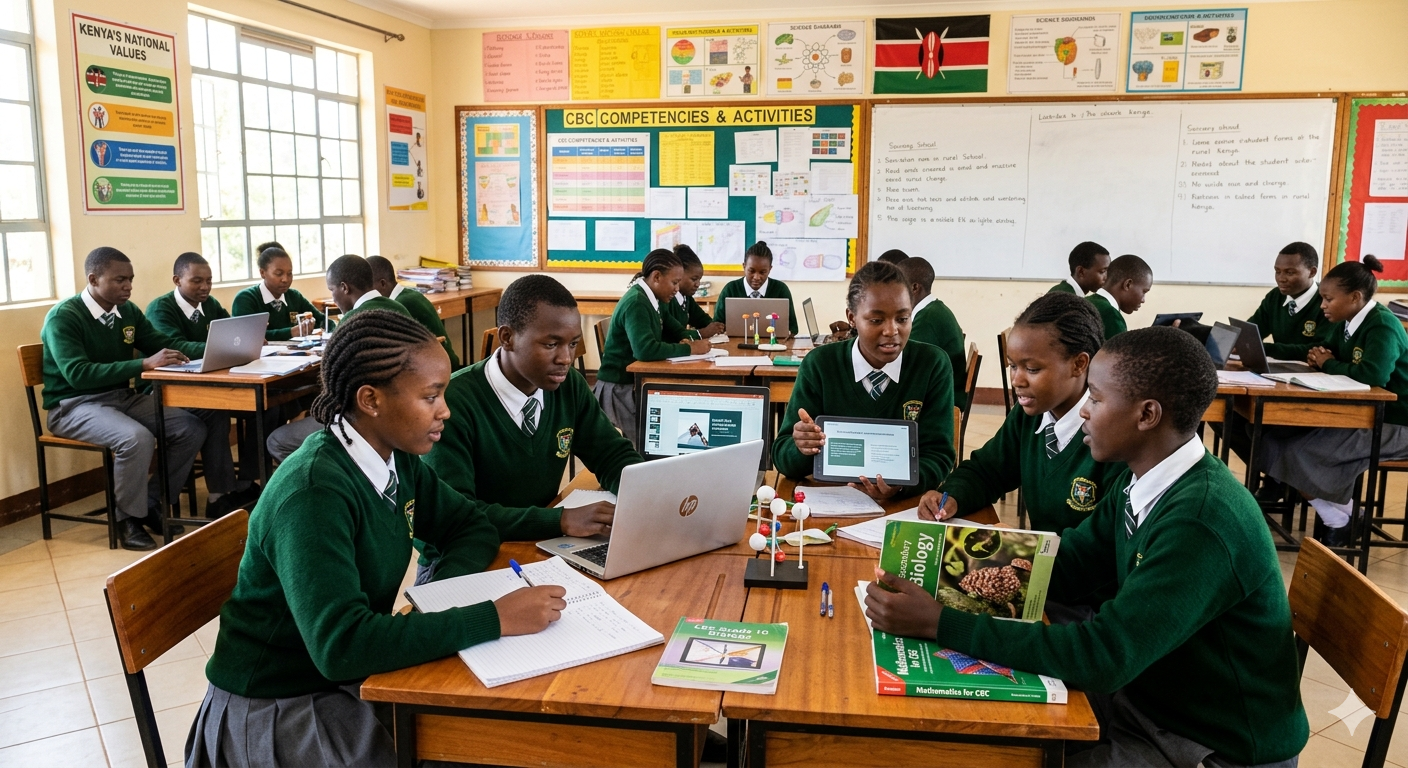
The transition is officially here. Over 1.2 million pioneer CBC learners have moved from Junior Secondary into Grade 10 Senior School, marking the largest, most aggressive educational shakeup in Kenya's history.
Instead of the old 8-4-4 routine, students are now forced to specialize early into three strict career pathways: STEM, Social Sciences, or Arts and Sports.
However, hidden textbook supply backlogs, rushed teacher retooling, and unequal school infrastructure mean that many students are being pushed into pathways based on what their school can afford, rather than what the child actually excels at.
What This Transition Means For You
For Parents
High anxiety. The national placement process relies heavily on a split score: 40% from school-based continuous assessments and 60% from the Kenya Junior Secondary School Education Assessment (KJSEA). You face the stressful reality that if your child's school lacks a functional lab, your child may miss out on their dream STEM pathway completely.
For Teachers
Intense classroom pressure. Secondary school principals and labor unions (like KUPPET) have flagged major gaps in teacher retooling. Educators are being asked to handle brand-new advanced subject clusters with very brief training, while struggling with overstretched timetables of 40 lessons a week.
For Students
The end of general education. At age 15 to 17, your career track is being locked in. While everyone still takes core English, Kiswahili, Mathematics, and the new Community Service Learning module, your remaining three elective slots are tied strictly to your designated pathway.
The Deep Dive: The Reality on the Ground
The Ministry of Education stepped up by disbursing billions in capitation funds to ease the term rollouts, but the structural friction remains high.
1. The Battle of the Three Pathways
Senior School is no longer a one-size-fits-all journey. Students must fit into one of these distinct tracks:
STEM: Pure sciences, applied sciences, and technical/engineering tracks
Social Sciences: Humanities, business studies, and foreign/indigenous languages
Arts & Sports Science: Performing arts, visual arts, and sports recreation
The problem? Not every school is equal. While established national hubs are partnering with national polytechnics to offer aviation, marine, or specialized sports training, smaller sub-county schools are struggling just to put up basic science laboratories.
2. The Hidden Textbook Crunch
Behind the scenes, a major supply-chain bottleneck threatens learning consistency. The local printing and manufacturing associations flagged a massive 11.4 billion Shilling outstanding debt from previous curriculum distributions.
Because printers have faced severe cash flow strains, the distribution of specialized Grade 10 learning materials has lagged across several counties, leaving teachers to improvise lesson plans without standard textbooks.
Let's Talk: What is the Reality in Your Local School?
The government claims the transition is fully on course, but we know the ground can look very different from the ministry offices in Nairobi.
Parents, teachers, and students: Has your school successfully set up its Grade 10 pathways? Are you getting the required textbooks, or are parents being asked to buy extra materials? Drop your county and your raw experience in the comments below!
Want the full analysis? Unseen ministry reports, pathway selector, parent checklist, and school infrastructure scorecard are waiting for you on the main blog.
Click here to read the complete breakdown →