 '">
'">
Kenya faces an energy crisis. Millions of families rely on charcoal and firewood for cooking, leading to deforestation and respiratory diseases. Biogas offers a solution: using animal manure and kitchen waste to produce methane gas for cooking, lighting, and even running generators. This project lets you build a miniature biogas digester to understand the science behind this sustainable technology.
Biogas is produced when bacteria break down organic matter in the ABSENCE of oxygen (anaerobic conditions). The process produces methane (CH₄ - 50-70%), carbon dioxide (CO₂ - 30-50%), and trace gases. Methane is flammable and can be used as fuel just like natural gas.
- Methane gas is FLAMMABLE. Never test with a flame near the digester.
- Work in a WELL-VENTILATED area (outside or near open windows).
- Wear gloves when handling organic waste and slurry.
- Do NOT seal the digester completely – pressure can cause explosion.
- Adult supervision required for gas testing with flame.
- Large plastic container (5-10 litres) - recycled water bottle or jerrycan with tight lid
- Balloon (large, thick rubber) - to collect biogas
- Plastic tube or hose (30-50 cm) - old bicycle tube or aquarium tubing
- Hot glue gun or sealant - for airtight seals
- Cow dung or goat droppings (1 cup) - bacteria source
- Kitchen vegetable waste (2 cups) - chopped small
- Water (2-3 litres) - non-chlorinated
💰 Total cost: 0-100 KES (only sealant may need purchase).
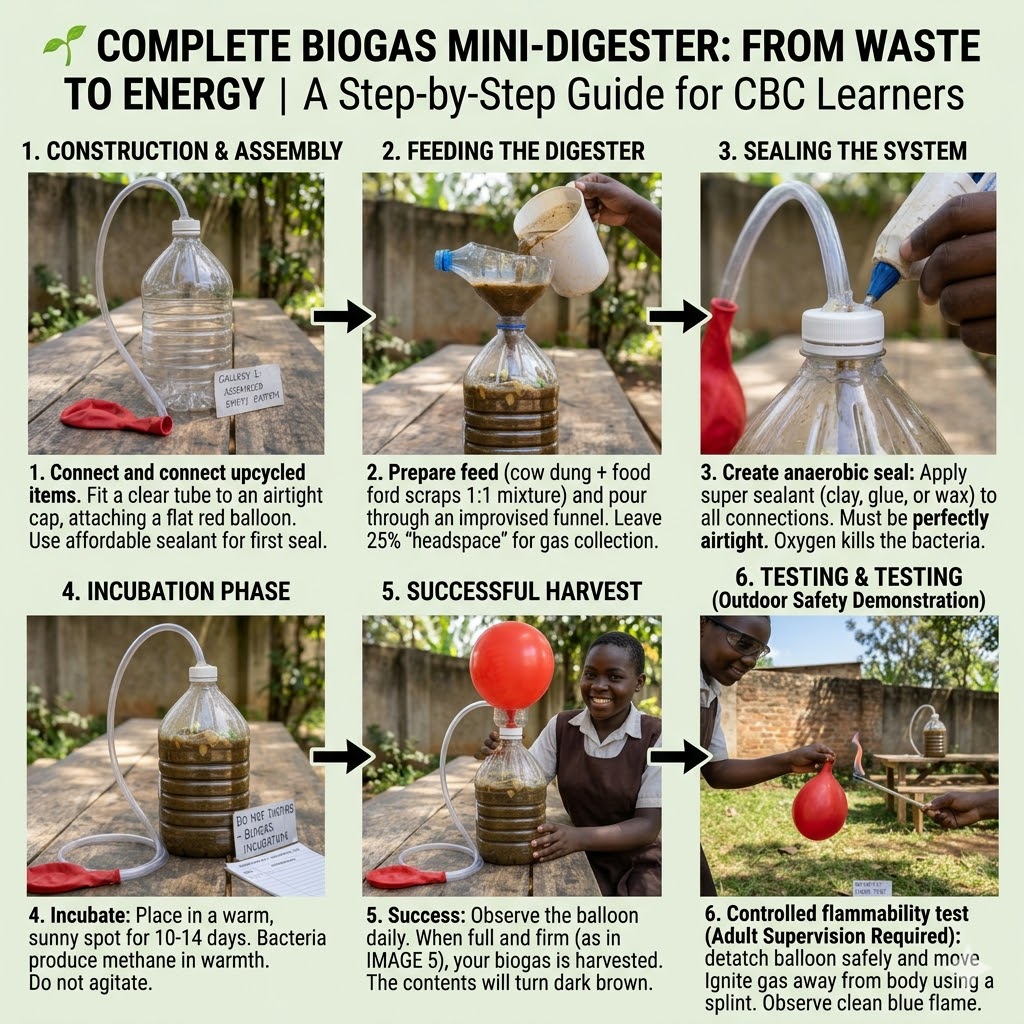
Prepare the digester container
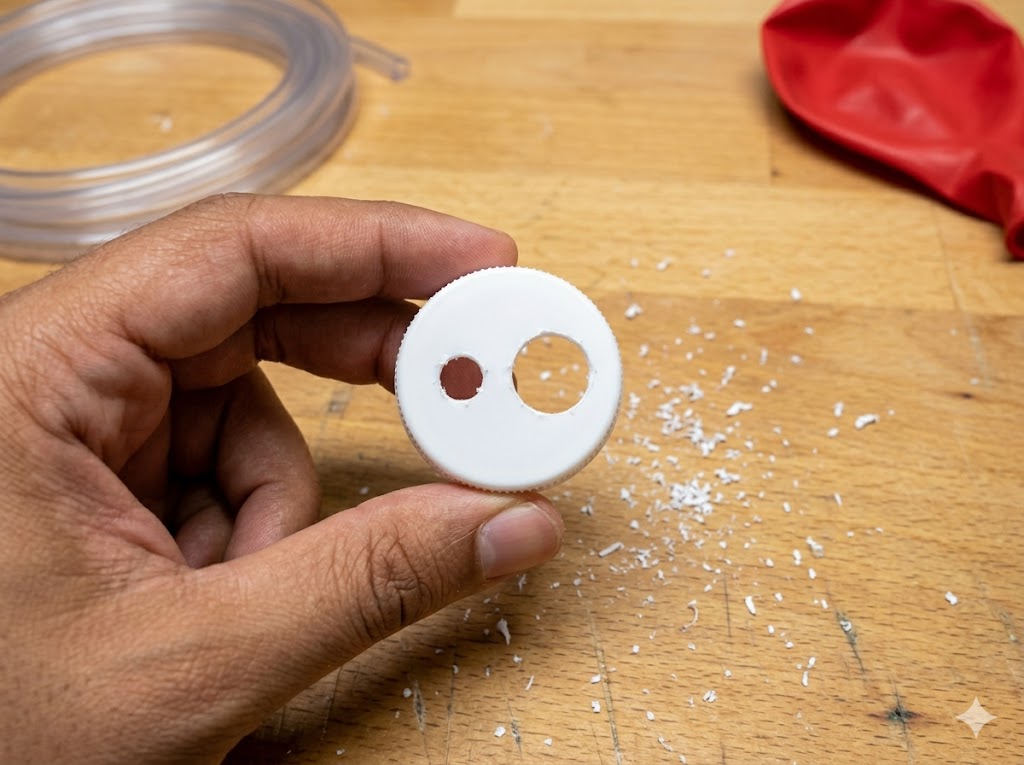
Clean your plastic container thoroughly. Drill TWO holes in the lid: one for gas outlet (1cm), one for feeding (2-3cm).
 '">
'">
Install the gas outlet tube
Insert plastic tube into the smaller hole. Seal around tube with hot glue – must be completely airtight.
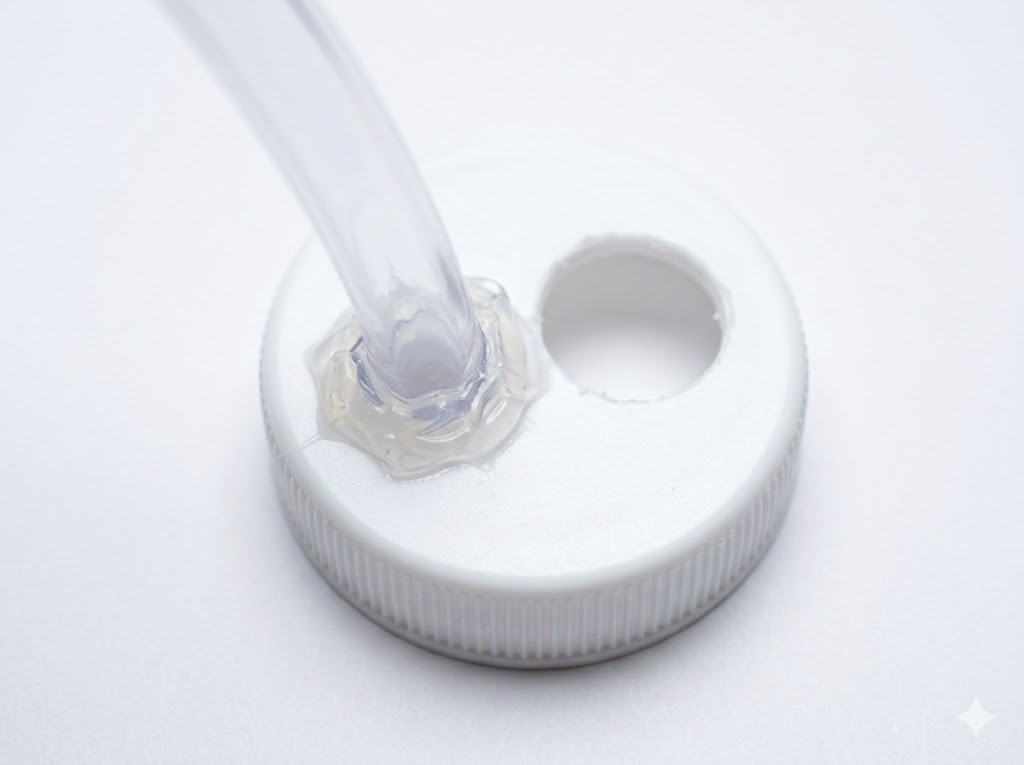 '">
'">
Connect the balloon
Attach balloon to the other end of the tube. Secure with rubber band – no gas leaks.
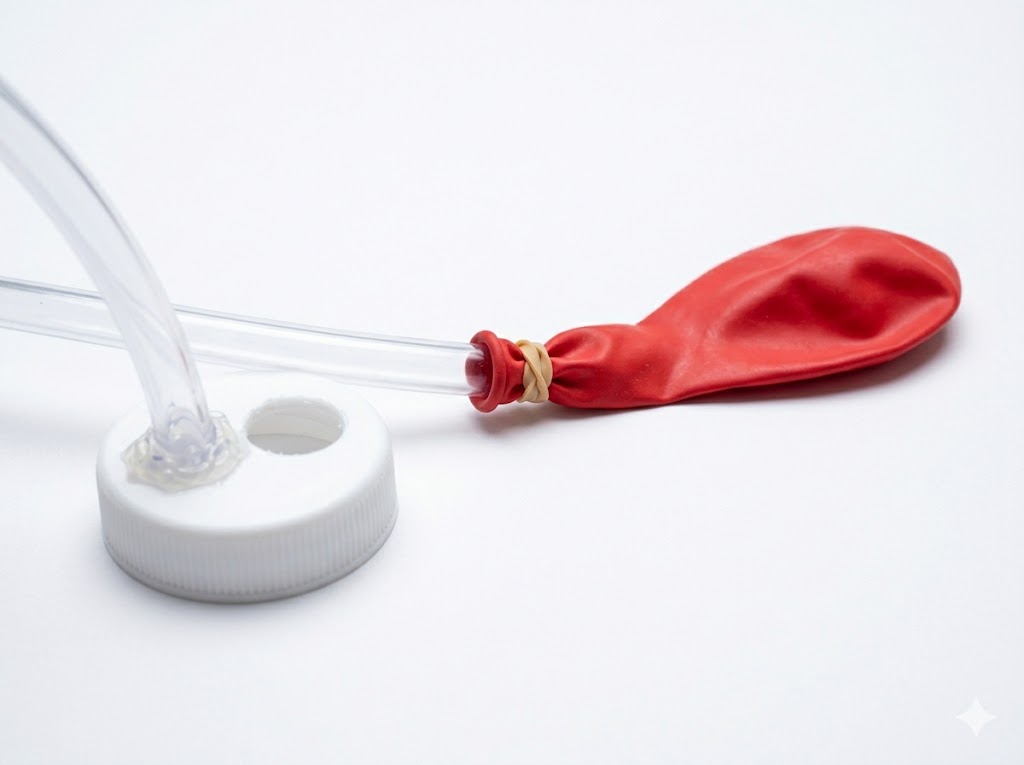 '">
'">
Prepare the feedstock mixture (slurry)
Mix 1 cup cow dung, 2 cups chopped vegetable waste, and 2-3 litres warm water into a soup-like consistency.
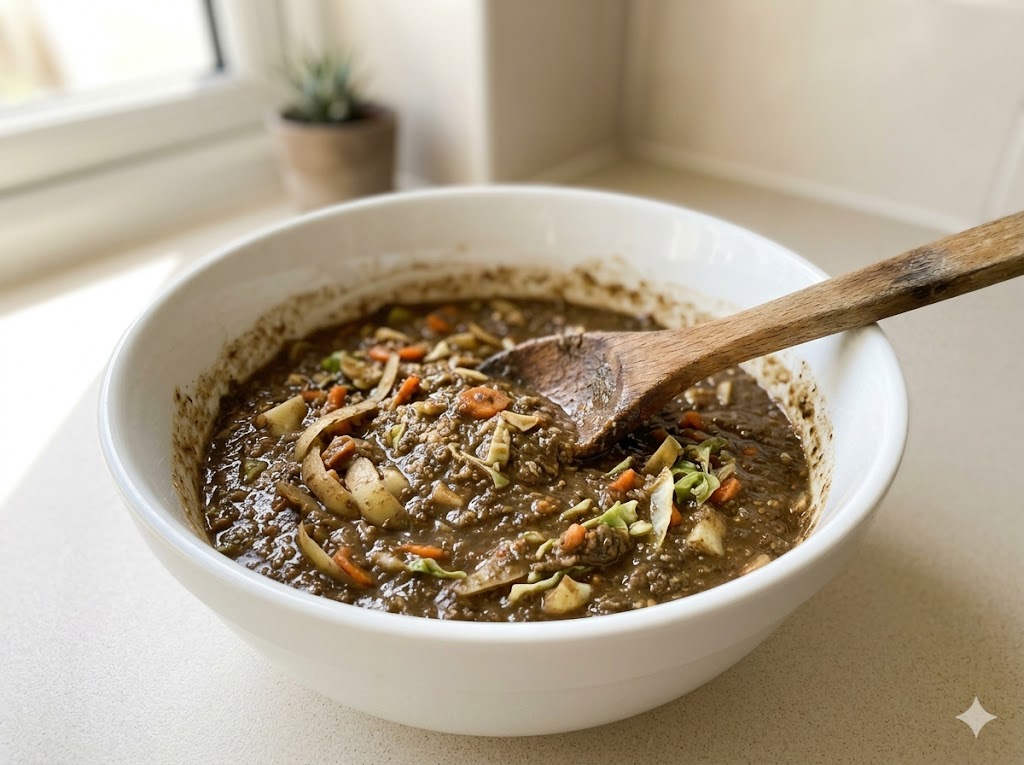 '">
'">
Fill the digester
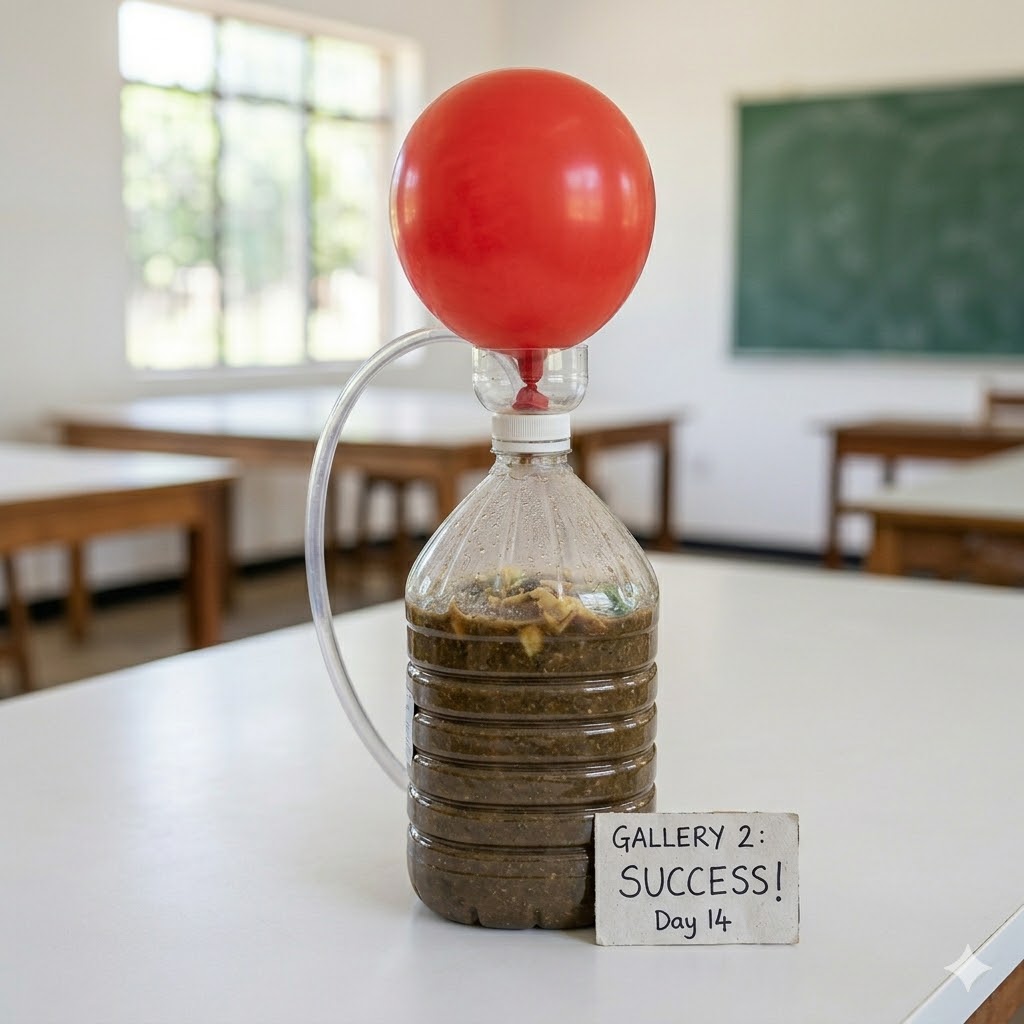
Pour slurry into container through larger hole. Fill to 75% – leave space for gas collection. Seal the larger hole.
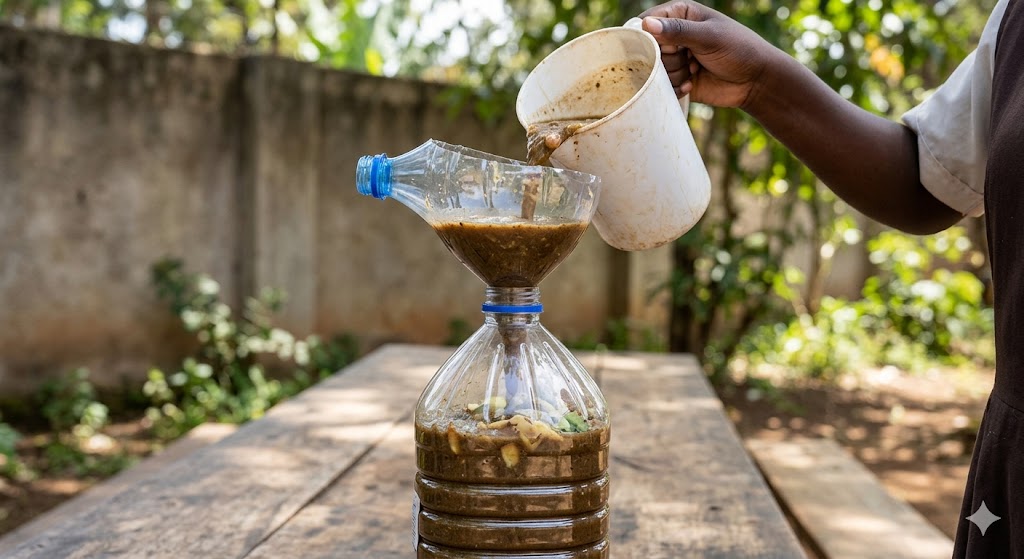 '">
'">
Place in warm location
Put digester in warm spot (25-35°C). Sunny window or outdoors in partial sun works best.
 '">
'">
| Day | Temperature | Balloon Status | Smell | Slurry Appearance | Notes |
|---|---|---|---|---|---|
| 1 | _____ | _____ | _____ | _____ | Setup complete |
| 2 | _____ | _____ | _____ | _____ | _____ |
| 3 | _____ | _____ | _____ | _____ | _____ |
| 4 | _____ | _____ | _____ | _____ | _____ |
| 5 | _____ | _____ | _____ | _____ | _____ |
| 6 | _____ | _____ | _____ | _____ | _____ |
| 7 | _____ | _____ | _____ | _____ | _____ |
| 8 | _____ | _____ | _____ | _____ | _____ |
| 9 | _____ | _____ | _____ | _____ | _____ |
| 10 | _____ | _____ | _____ | _____ | Gas expected soon |
| 14 | _____ | _____ | _____ | _____ | _____ |
| 21 | _____ | _____ | _____ | _____ | Gas test day |
 '">
'">
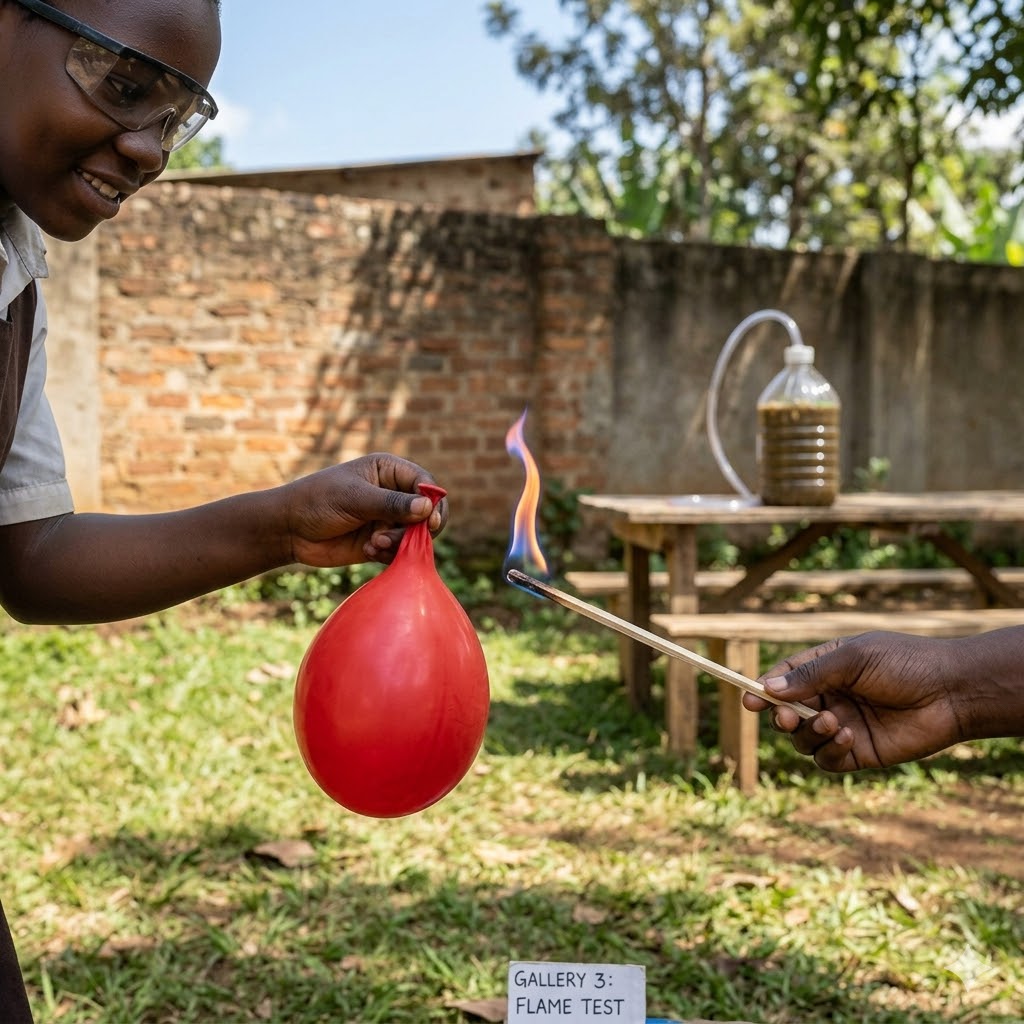
⚠️ Perform outdoors with adult supervision
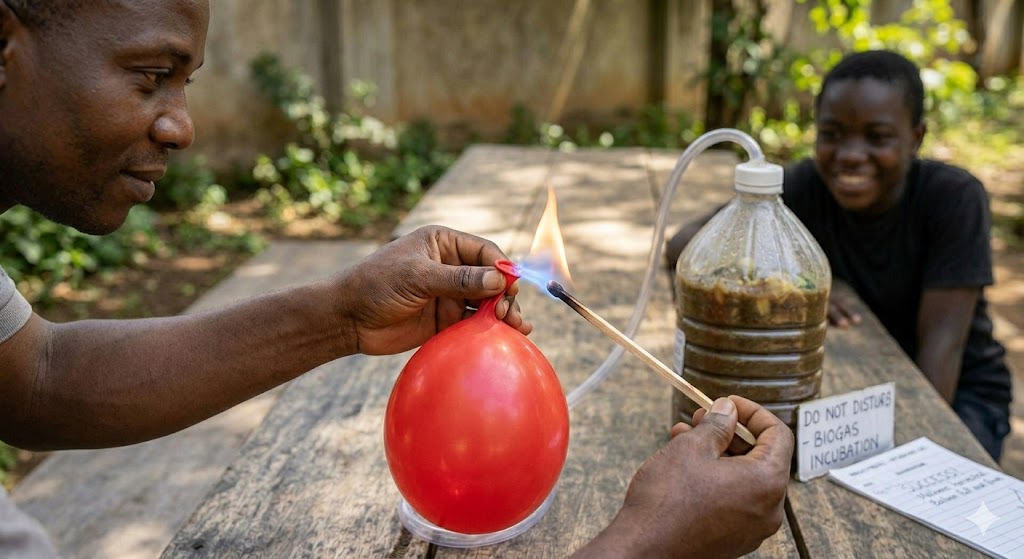
- Take the setup OUTSIDE away from buildings.
- Carefully remove the balloon from the tube.
- Light a candle or long match.
- SLOWLY release a small amount of gas toward the flame.
- Expected result: Small blue/orange flame – methane burning!
 '">
'">
- Hydrolysis: Bacteria break down complex organic matter into simpler compounds.
- Acidogenesis: Acid-forming bacteria convert these into organic acids.
- Acetogenesis: Bacteria convert organic acids into acetic acid and hydrogen.
- Methanogenesis: Methane-producing bacteria create methane (CH₄).
- ❌ No gas after 14 days: Temperature too cold – move to warmer spot or wrap in black plastic.
- 🎈 Balloon not inflating: Leak in seal – check connections and reseal.
- 💨 Bad smell (rotten eggs): Normal! Hydrogen sulphide means bacteria are active.
- 🔥 Gas won't ignite: Methane concentration too low – wait longer or add more cow dung.
- ⚠️ Balloon over-inflated: Release some gas – pressure can burst the balloon.
- Compare different feedstocks (vegetable waste vs. manure only)
- Temperature experiment: sun vs. shade
- pH monitoring using strips (optimal 6.5-7.5)
- Research Kenya's National Biogas Program
| Criteria | Exceeds (5) | Meets (4) | Approaching (3) | Below (2-1) |
|---|---|---|---|---|
| Digester Construction | Airtight seals, functional outlet, photos | Mostly airtight, minor leaks | Significant leaks | Non-functional |
| Feedstock | Correct proportions, chopped fine | Basic proportions correct | Missing key ingredient | Wrong materials |
| Observations | 14+ days complete log, gas tested | 10-13 days, test attempted | 7-9 days | Fewer than 7 days |
| Report & Understanding | Explains all 4 stages, real-world applications | Explains basic process | Partial explanation | No explanation |
- Measure gas volume by water displacement
- Calculate methane yield per kg of waste
- Research Kenya's National Biogas Program
- Build a simple biogas stove demonstration
Kenya has 15,000+ biogas systems installed. Biogas technicians earn 30,000-50,000 KES/month. Engineers design large-scale digesters for farms and industries (80,000+ KES/month).