 '">
'">
DNA (Deoxyribonucleic Acid) is the blueprint of life. It contains the instructions that make every living organism unique. Scientists extract DNA to study genetic disorders, identify criminals through forensics, develop genetically modified crops, and even trace human ancestry. In this project, you will extract and see DNA from a banana – which shares about 50% of its DNA with humans! This experiment uses simple household chemicals to break open cells and separate DNA from other cellular components.
All materials are household items:
- 1 ripe banana - the riper the better (softer cells = easier DNA release)
- 1/2 cup water - warm water works best (45-50°C)
- 1 teaspoon salt (NaCl) - table salt or any cooking salt
- 2 teaspoons dish soap or liquid detergent - any brand; breaks down cell membranes
- 1/2 cup cold isopropyl alcohol (rubbing alcohol) - 70-99% strength. Keep in freezer for 30 minutes before use.
- Clear glass or small jar - to see the DNA layer clearly
- Fork or spoon - for mashing banana
- Strainer or sieve - to remove banana pulp
- Small bowl or cup - for mixing
- Wooden skewer or toothpick - to spool/spiral the DNA
💰 Total cost: 0-150 KES (rubbing alcohol is the only purchase if not at home; available at pharmacy for 100-150 KES).
- 🧼 Soap (detergent): Breaks down the cell membrane and nuclear membrane. Soap molecules surround lipids (fats) and pull the membranes apart – like washing grease off dishes.
- 🧂 Salt (NaCl): Neutralises the negative charge on DNA molecules. DNA normally repels itself (like two negative magnets). Salt allows DNA strands to clump together.
- ❄️ Cold alcohol: DNA is NOT soluble in alcohol. When cold alcohol is added, DNA precipitates (comes out of solution) and forms visible white strands. The cold temperature slows down enzymes that might destroy DNA.
- 🔨 Mashing: Physically breaks cell walls, releasing cellular contents into the solution.
Prepare the DNA extraction solution (lysis buffer)
In a small bowl or cup, mix together:
- 1/2 cup warm water
- 1 teaspoon salt
- 2 teaspoons dish soap
Stir gently until salt dissolves completely. This is your "lysis buffer" – it will break open banana cells.
 '">
'">
Mash the banana
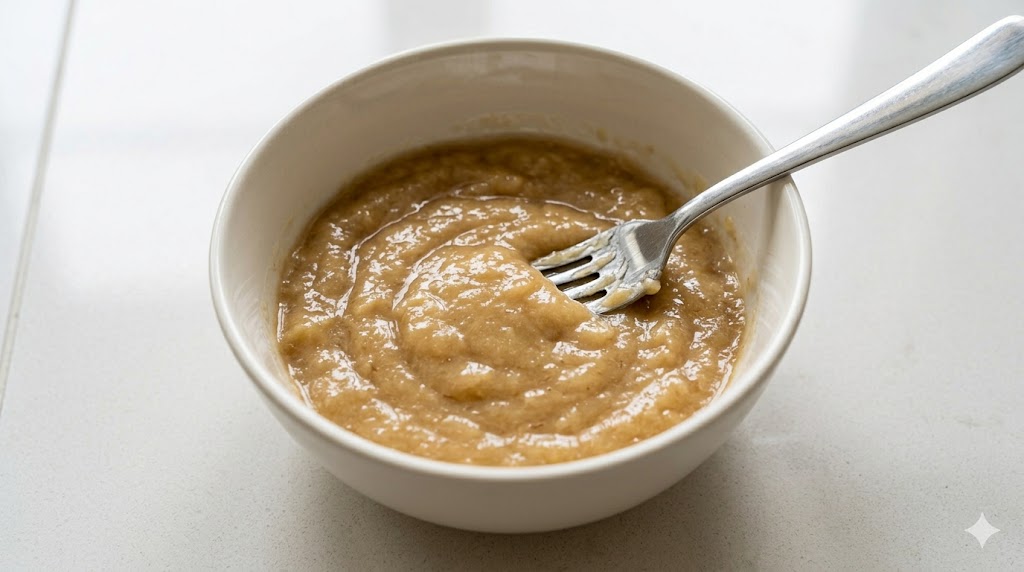
Peel the banana and break it into small pieces. Place pieces in a clean bowl. Use a fork to mash the banana into a smooth, pasty consistency (no large chunks). Mashing for 2-3 minutes works best.
 '">
'">
Add lysis buffer to mashed banana
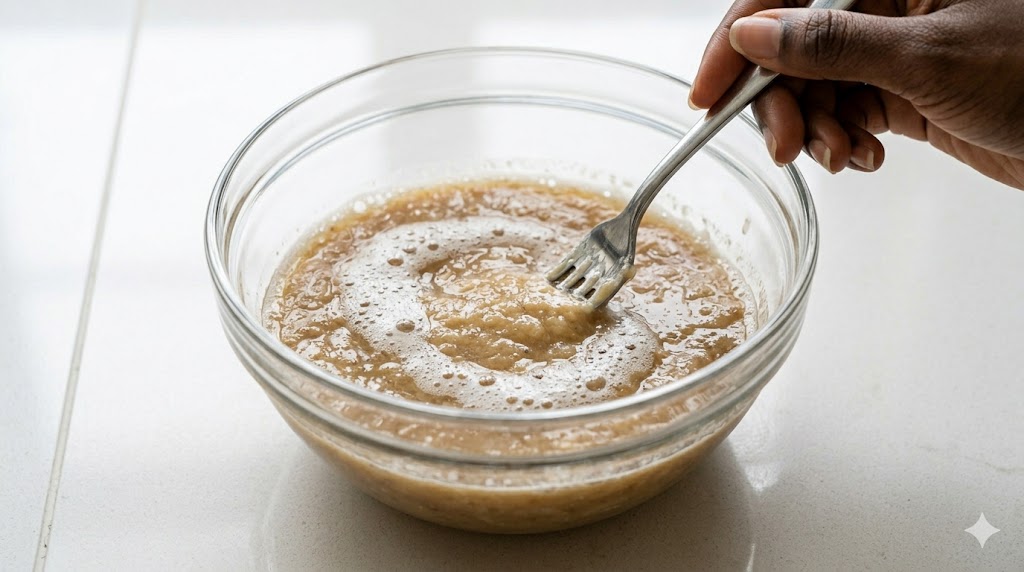
Pour the extraction solution (soap + salt + water) into the mashed banana. Stir and mix thoroughly for 2-3 minutes. The mixture will become soupy and may develop foam – this is normal (soap is breaking cell membranes).
 '">
'">
Filter the mixture
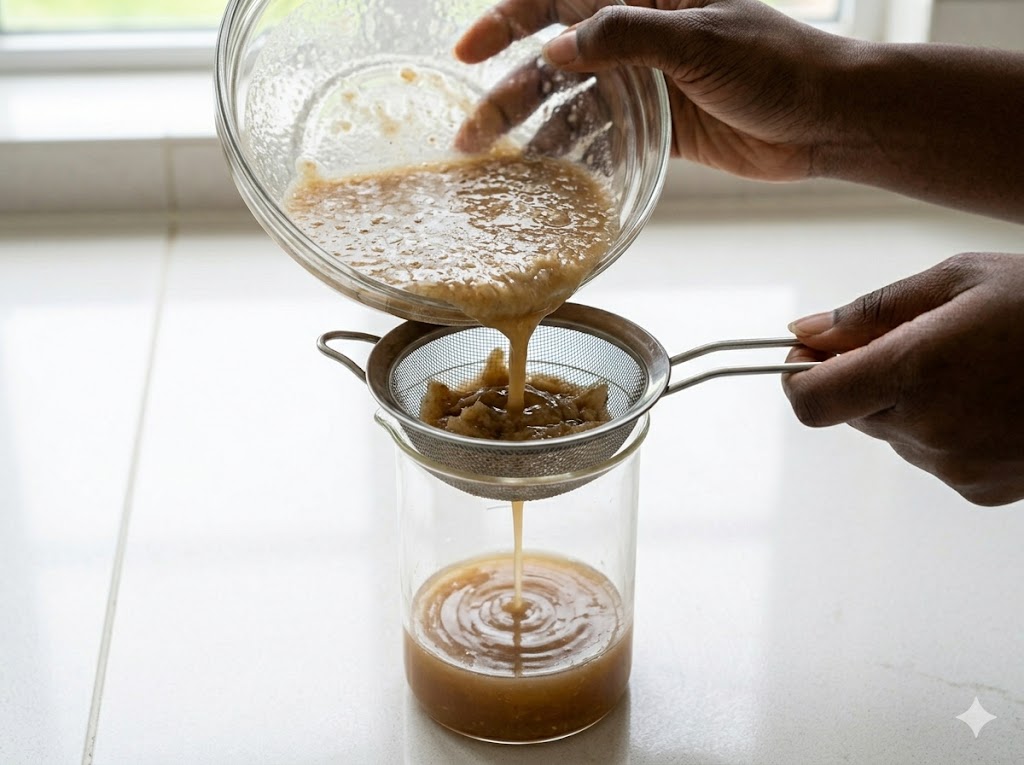
Pour the banana-soap mixture through a strainer or sieve into a clean glass or jar. Press the banana pulp with the back of a spoon to squeeze out as much liquid as possible. Discard the solid pulp. The liquid in the glass contains dissolved DNA.
 '">
'">
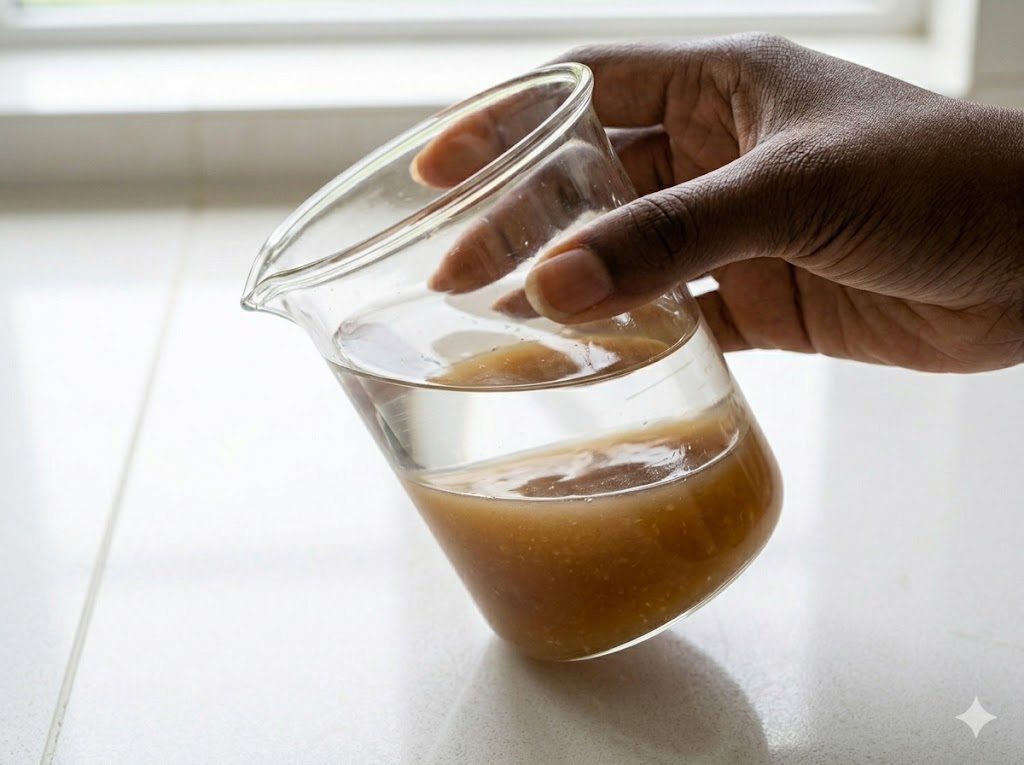
Add cold alcohol (the magic step)
Tilt the glass slightly and slowly pour 1/4 cup of cold isopropyl alcohol down the side of the glass. Do NOT mix or stir. The alcohol should form a separate layer on top of the banana liquid. Let the glass sit undisturbed for 2-5 minutes.
 '">
'">
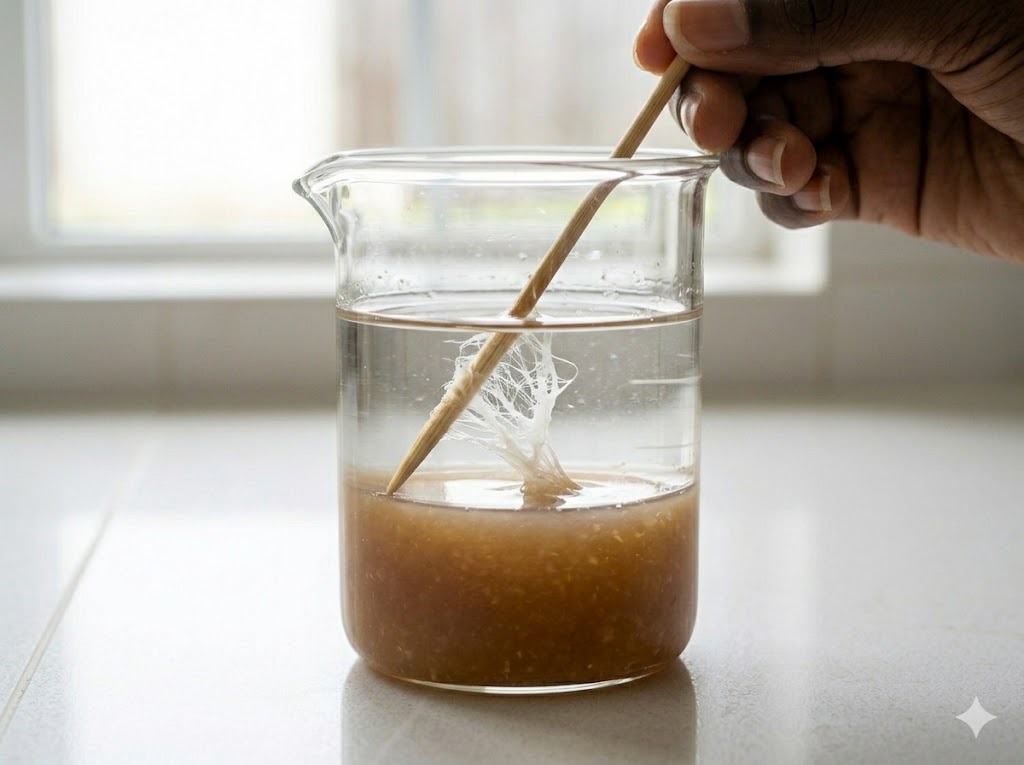
Observe the DNA precipitate
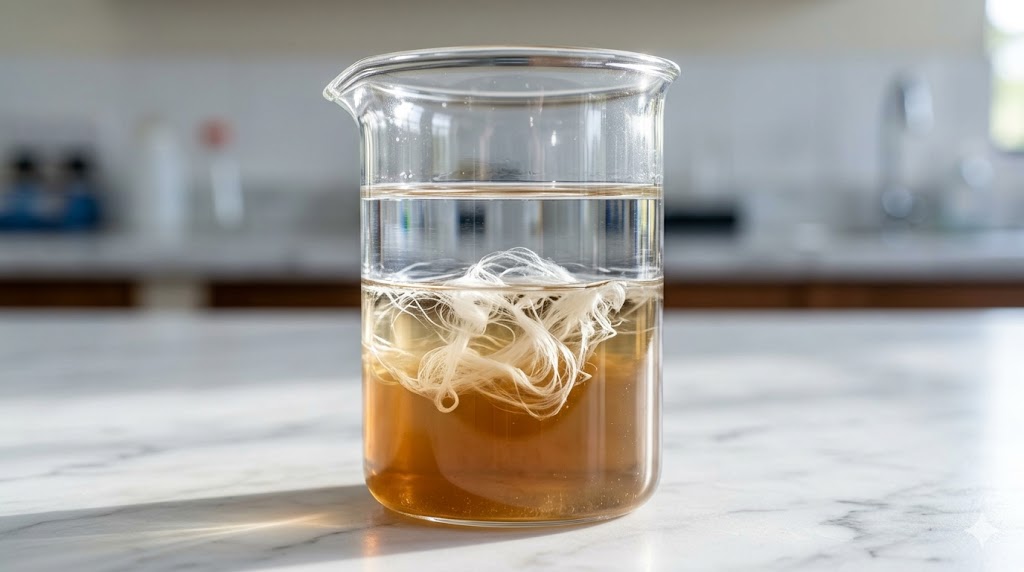
Within 2-5 minutes, you will see white, stringy, mucus-like strands forming at the interface between the banana liquid (bottom layer) and the alcohol (top layer). This is DNA! Use a wooden skewer or toothpick to gently spool (twist) the DNA strands. They will wrap around the stick like wet cotton thread.
 '">
'">
| Step | Observation (colour, texture, layers) | Time Taken |
|---|---|---|
| Mashed banana | _______________ | _______ min |
| After adding lysis buffer | _______________ | _______ min |
| After filtering | _______________ | _______ min |
| After adding alcohol (immediate) | _______________ | _______ |
| After 2 minutes | _______________ | _______ |
| After 5 minutes | _______________ | _______ |
| DNA appearance (colour, texture) | _______________ | _______ |
📸 Draw or photograph your extracted DNA here (Day ___):

- ❌ No white strands visible: Alcohol was not cold enough OR alcohol was poured too fast and mixed. Repeat with colder alcohol, pour slowly down the side.
- 📉 Very little DNA: Banana was not mashed thoroughly OR too much soap was used. Use exact measurements next time.
- 🟤 Brown or green colour: Banana pieces not filtered out properly. Strain again through finer sieve or cloth.
- ⚪ DNA clumped into one blob: Normal! Use toothpick to gently separate strands.
- 💧 No layers formed: Alcohol and water mixed. Your alcohol may have been too warm or you poured too fast. Let glass sit longer.
🧪 Take Your Experiment Further
- Compare DNA yields from different fruits: Strawberry (octoploid – 8 sets!), kiwi, onion, tomato. Which gives the most DNA?
- Test different soaps: Dish soap vs laundry detergent vs shampoo vs hand soap.
- Temperature experiment: Room temperature alcohol vs freezer-cold alcohol – compare yields.
- DNA concentration estimate: Measure how many centimetres of DNA you can spool out.
| Criteria | Exceeds (5) | Meets (4) | Approaching (3) | Below (2-1) |
|---|---|---|---|---|
| Experimental Protocol | All steps followed. Measurements precise. Alcohol ice-cold. Visible DNA strands clearly visible. | Most steps followed. DNA visible but small amount. | Steps incomplete. DNA barely visible. | Procedure not followed; no DNA. |
| Scientific Understanding | Explains role of each reagent (soap, salt, alcohol). Draws labelled DNA structure. | Explains 2 of 3 reagent roles correctly. Basic DNA diagram. | Explains 1 reagent role. No diagram. | No explanation. |
| Observation & Documentation | Complete log. 3+ photos showing stages. Written description of DNA. | Log complete. 2 photos. Basic description. | Log partial. 1 photo or none. | No documentation. |
| Extension & Analysis | Completes 1+ extension experiments. Compares results. Career connections. | Attempts extension. Basic comparison. | Extension incomplete. | No extension. |
- Calculate approximate DNA yield: measure length of DNA strands spooled (in cm).
- Research: "How do forensic scientists use DNA extraction to solve crimes?" Include Kenyan cases.
- Test different alcohol concentrations (50%, 70%, 90%) and measure DNA yield.
- Create infographic explaining "Central Dogma of Molecular Biology" (DNA → RNA → Protein).
In Kenya, KEMRI uses DNA analysis to track disease outbreaks. DCI forensic labs use DNA fingerprinting to solve crimes. ICIPE uses genetics to control crop pests. Careers in biotechnology are growing – from lab technicians (40,000 KES/month) to research scientists (100,000+ KES/month).
Step 2: Mashing banana

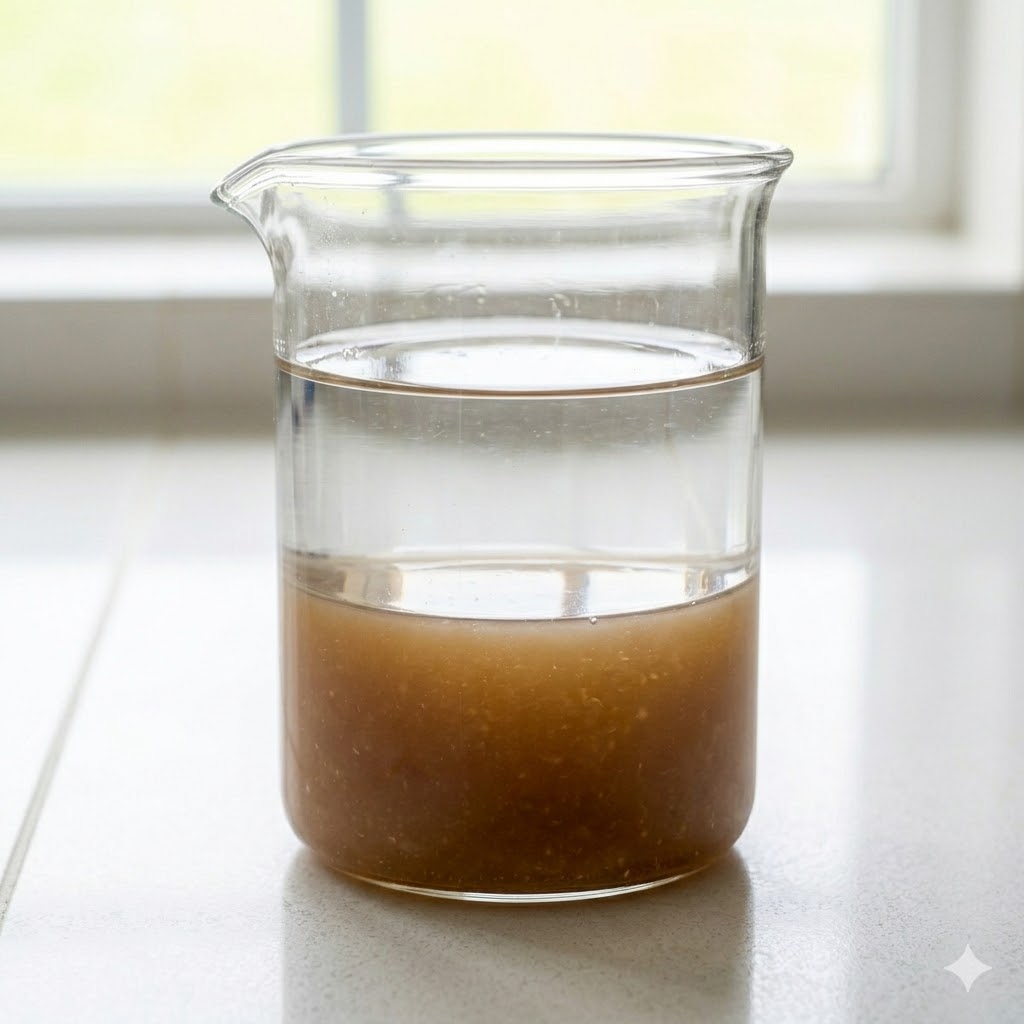
Step 5: Alcohol layer added

Step 6: Extracted DNA!
🖨️ Print or Save as PDF
Take this protocol to your lab. Record observations directly on the printed page.