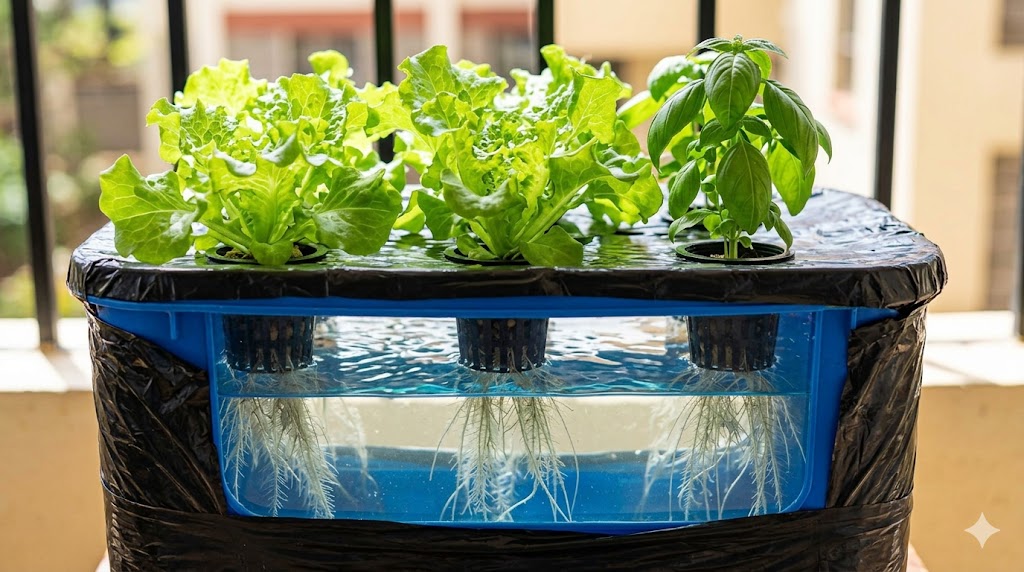
Kenya faces increasing water scarcity and shrinking arable land, especially in urban areas like Nairobi, Kisumu, and Mombasa. Hydroponics – growing plants in nutrient-rich water instead of soil – solves both problems. This system uses 70-90% less water than traditional farming and can be set up on a small balcony, rooftop, or backyard. In this project, you will build a working Deep Water Culture (DWC) hydroponic system using recycled containers and locally available materials.
Core Materials (mostly recycled):
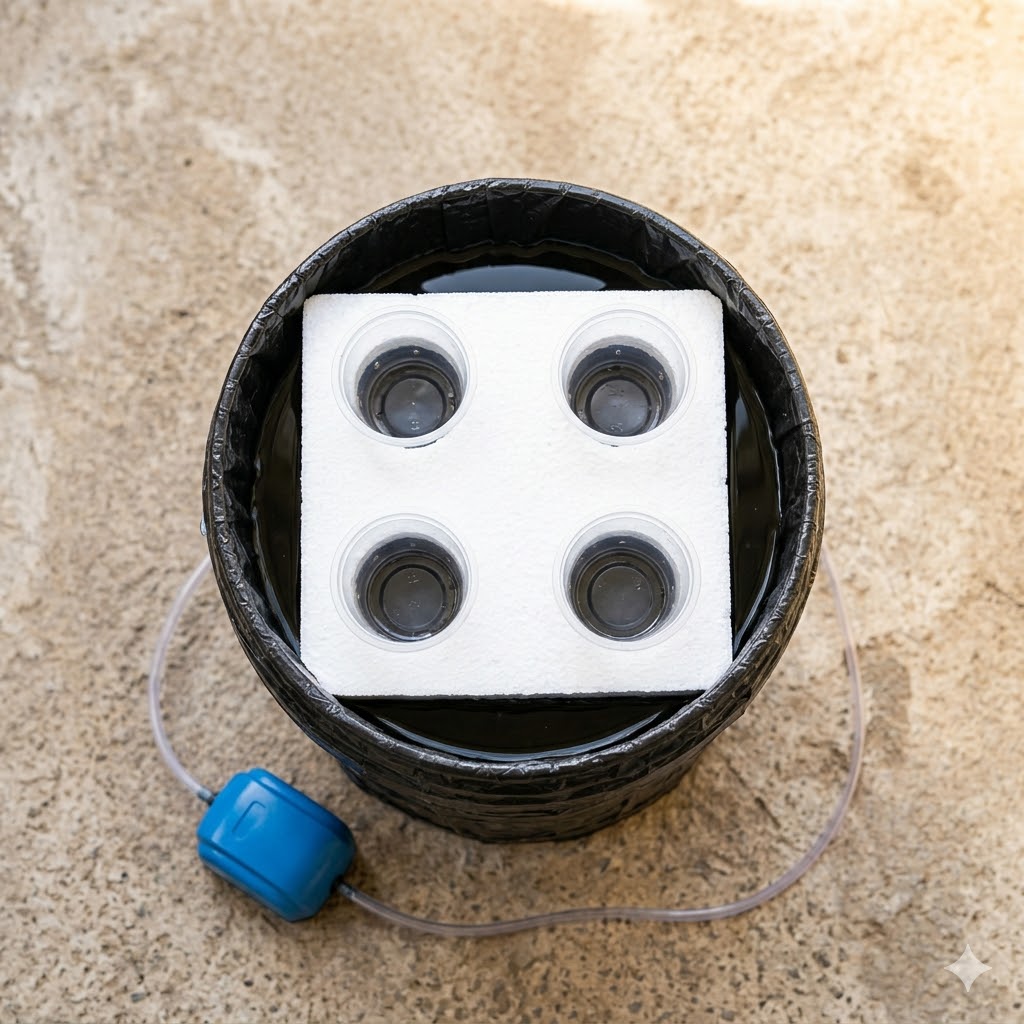
- 1 large plastic container (10-20 litres) – recycled bucket, food-grade tub. Must be opaque or wrapped to block light.
- Polystyrene foam sheet or styrofoam tray – recycled packaging material.
- Net cups or plastic cups with holes – 4-6 cups (yoghurt cups work perfectly).
- Growing medium – coconut coir, small pebbles, washed sand, or rice husks.
- Lettuce or spinach seeds – fast-growing, available at agrovet (20-50 KES).
- Air pump and air stone (optional but recommended) – aquarium air pump (300-500 KES).
- Black plastic sheet or paint – to cover container (prevents algae).
Nutrient Solution (Homemade):
- Compost tea – 1 bucket mature compost soaked in 5L water for 3 days, strained.
- Wood ash – 1 tbsp per 5L water (potassium source).
- Crushed eggshells – shells from 5 eggs, crushed and soaked in vinegar overnight (calcium).
- Epsom salts – 1 tsp per 5L (magnesium, from pharmacy ~50 KES).
💰 Total cost: 0-600 KES (mostly recycled; air pump optional).
🌿 DIY Hydroponic Nutrient Formula (for 5 litres of water)
- Base: 2 litres of compost tea (soak 1 cup mature compost in 2L water for 3 days, strain)
- Potassium: 1 tablespoon wood ash (dissolve in warm water first)
- Calcium: 2 tablespoons crushed eggshell vinegar solution (soak crushed shells in vinegar for 24h, use liquid)
- Magnesium: 1 teaspoon Epsom salt
- Water: Top up with rain or tap water to reach 5 litres
Alternative (simpler): Dilute complete liquid fertiliser (e.g., Nitrosol) at 1/4 strength: 10ml fertiliser + 1 litre water.
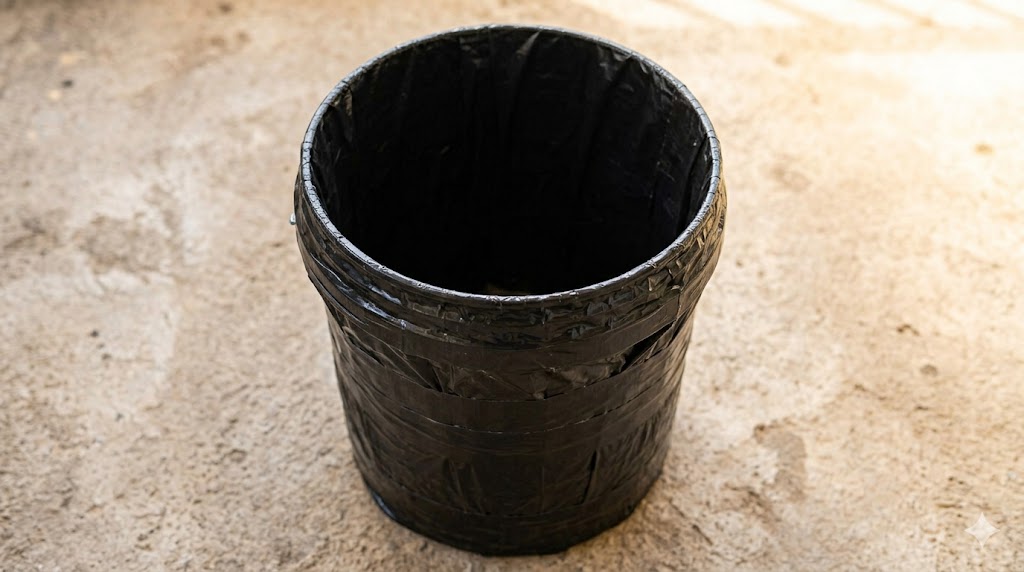
Clean container thoroughly. Wrap outside with black plastic or paint black to block light (prevents algae).
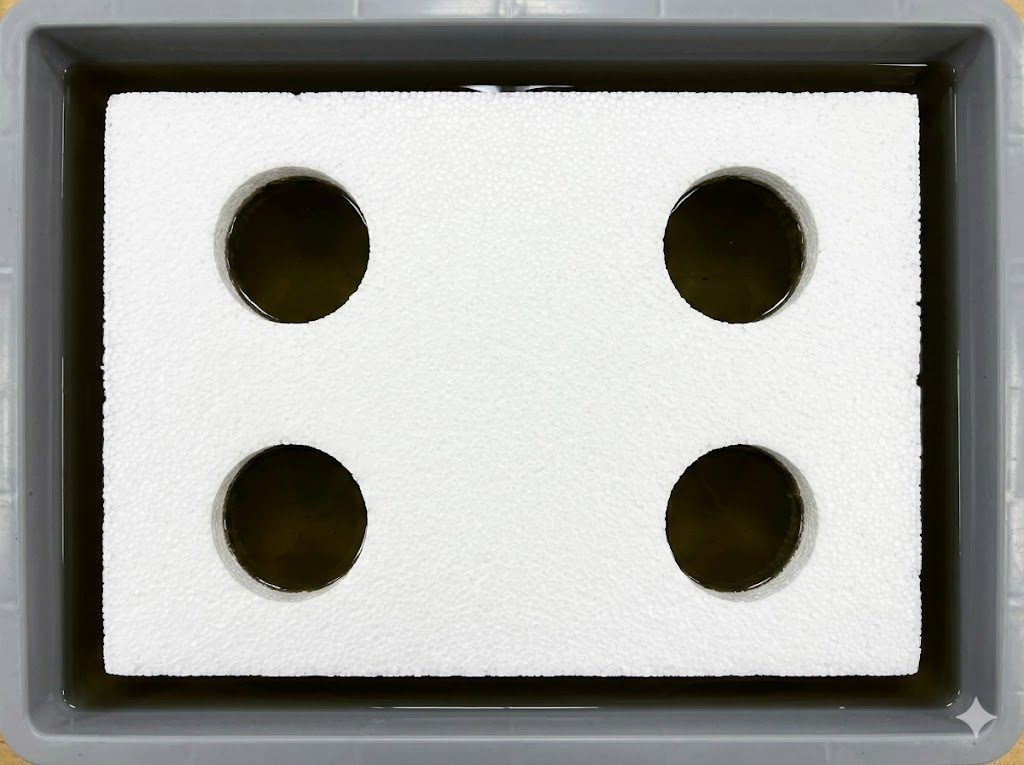
Cut polystyrene foam to fit inside container as floating lid. Mark and cut 4-6 holes (about 5cm diameter) for net cups.
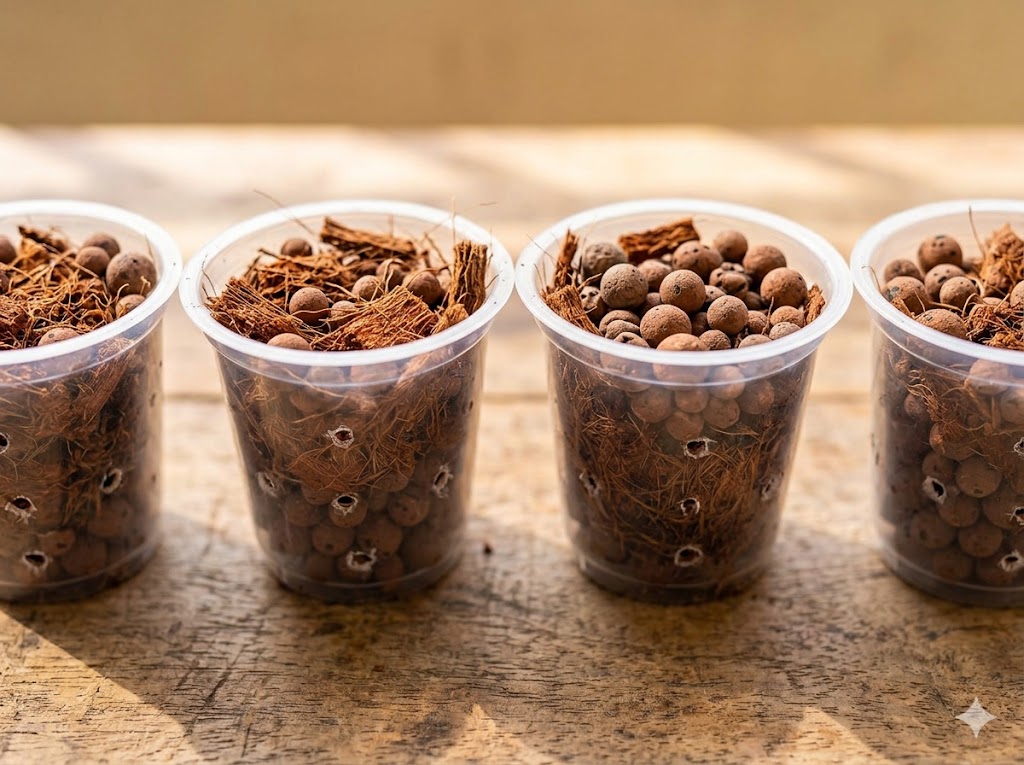
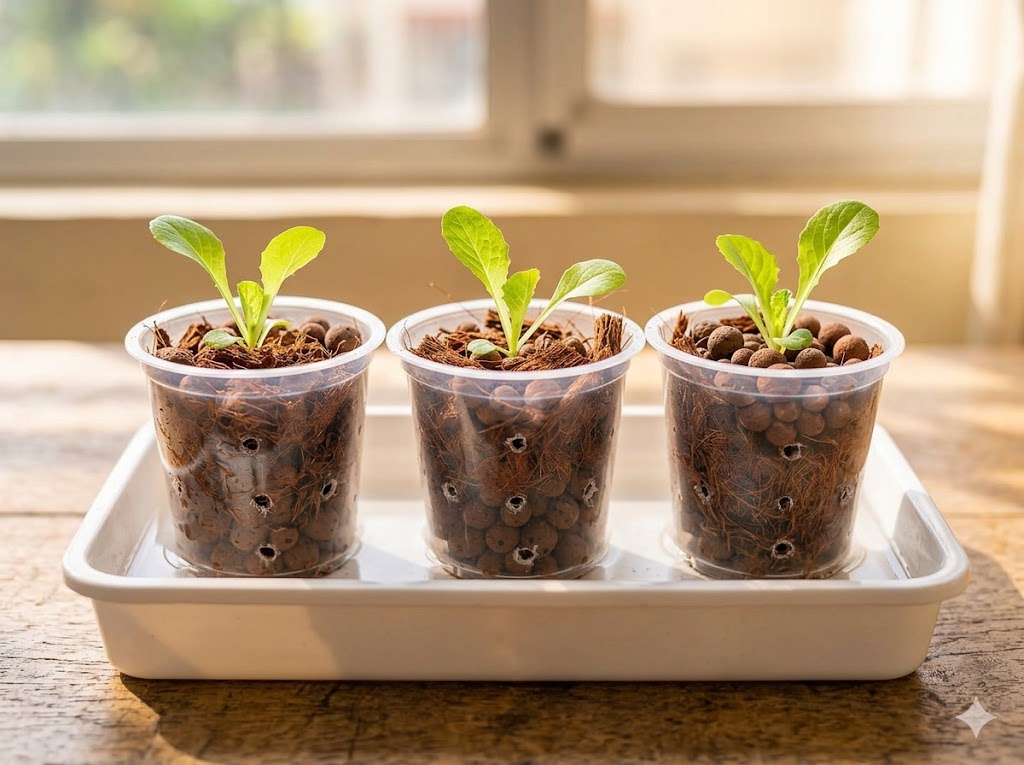
Poke 5-10 small holes in yogurt cups. Fill each cup with growing medium (coir, pebbles, or rice husks). Rinse thoroughly.
Plant 2-3 seeds per cup at 0.5cm depth. Water gently from top. Keep in warm, bright place. After 5-7 days when sprouts appear, transfer to hydroponic system.
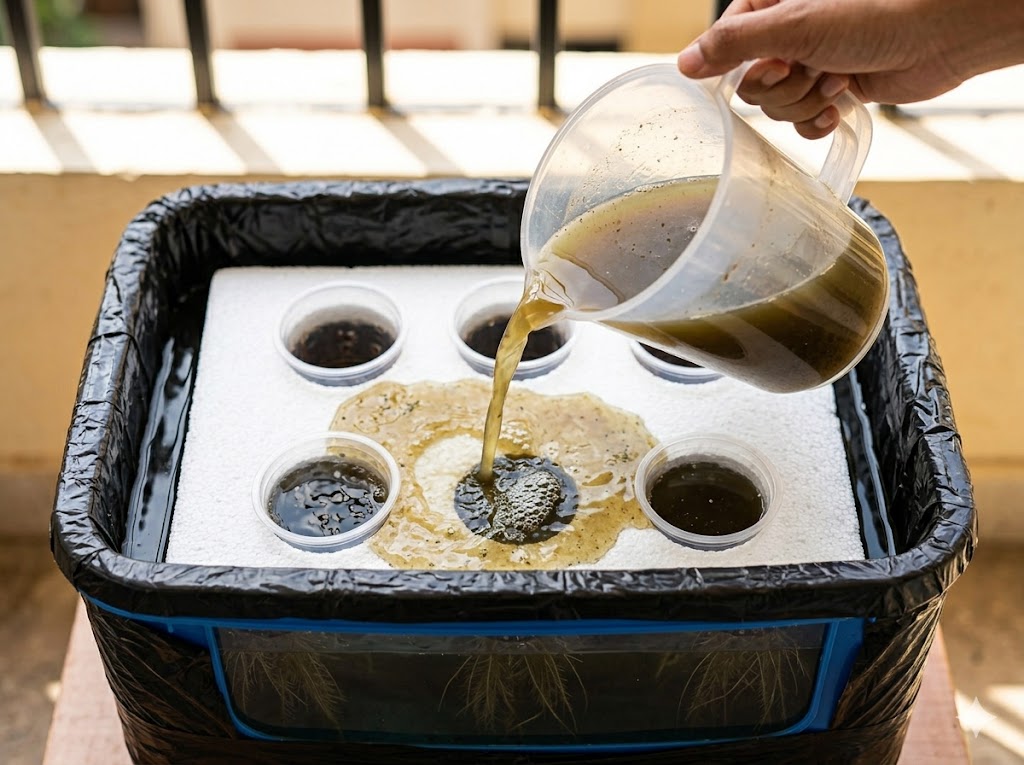
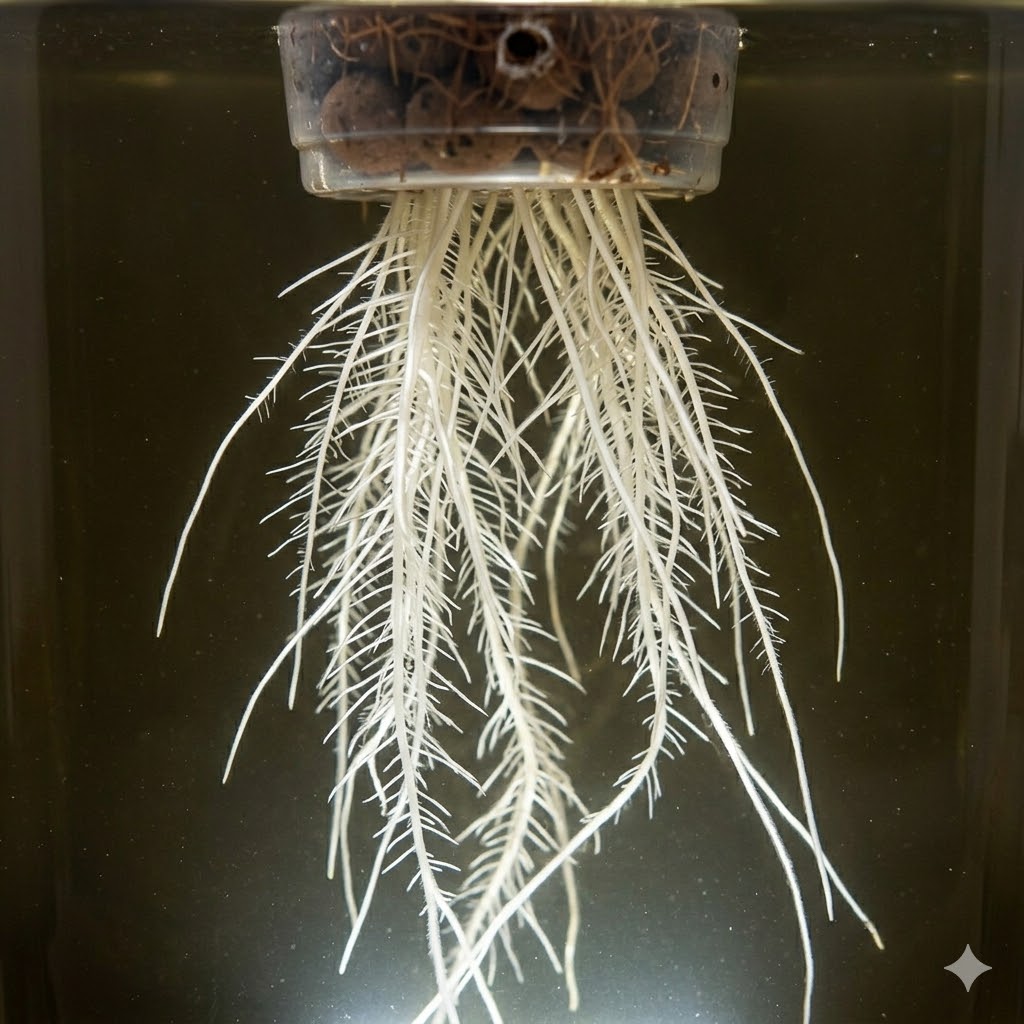
Prepare 5 litres of nutrient solution using recipe above. Pour into reservoir. Solution should reach 2-3cm below top. Place floating raft on top. Bottom of net cups should just touch water (about 1cm submerged).
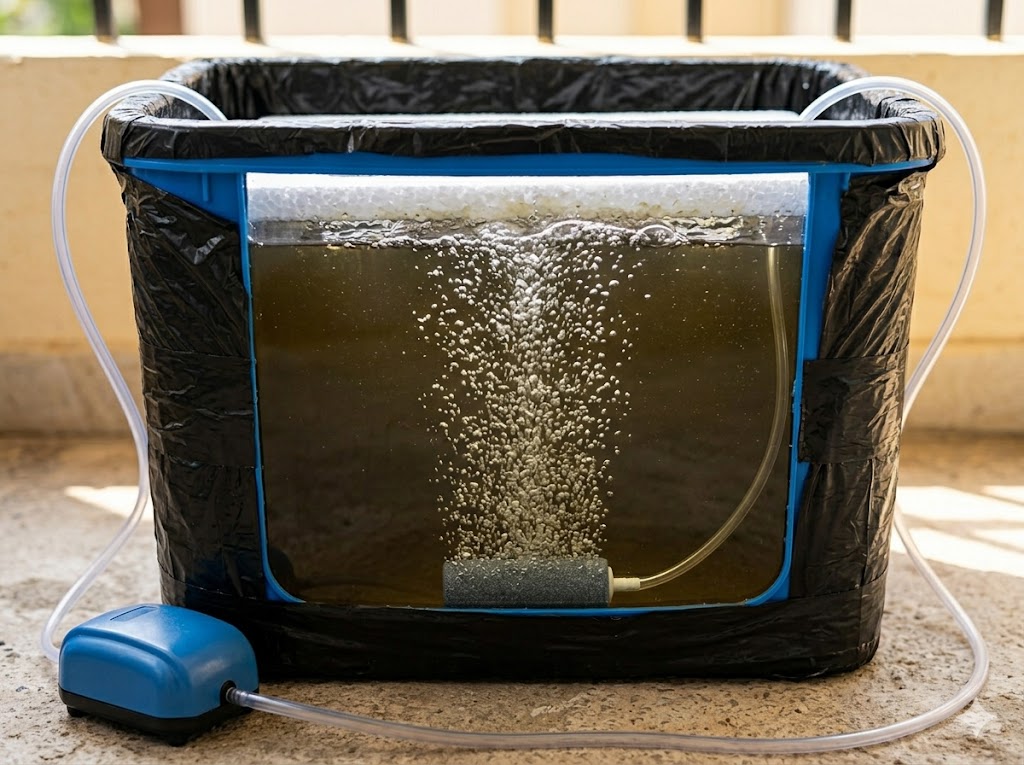
Place air stone at bottom of reservoir connected to air pump. Oxygen is critical for root health. Without pump, manually stir water twice daily or replace solution every 5 days.
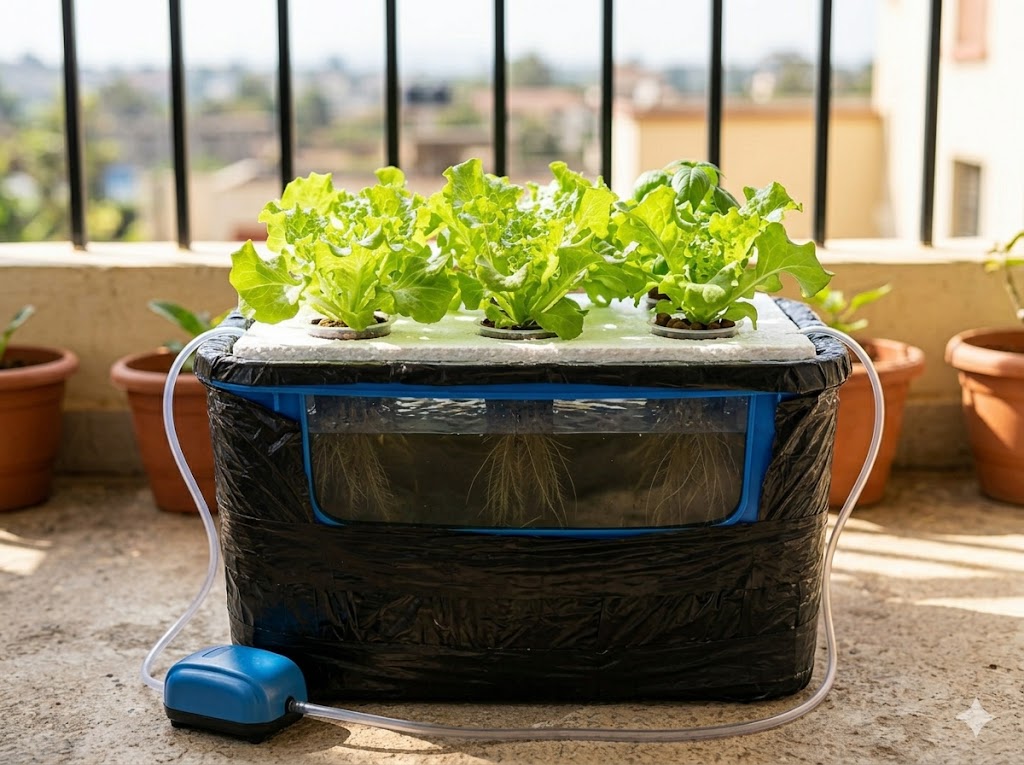
Position system where it receives 6-8 hours of sunlight daily (balcony, windowsill, sunny spot). Avoid strong wind.
Week 1 (Days 1-7)
Transplanting
Check water level daily. Add fresh water if low. Roots should touch water.
Week 2 (Days 8-14)
Vegetative Growth
Replace nutrient solution completely on Day 10. Measure plant height.
Week 3 (Days 15-21)
Rapid Growth
Check for pests. Top up water daily. Take photos for evidence.
Week 4 (Days 22-28)
Harvest
Lettuce/spinach ready. Harvest outer leaves first. Document final yield.
| Day | Plant Height (cm) | Number of Leaves | Root Length (cm) | Water Level | Observations |
|---|---|---|---|---|---|
| 1 (transplant) | _____ | _____ | _____ | _____ | _____ |
| 3 | _____ | _____ | _____ | _____ | _____ |
| 5 | _____ | _____ | _____ | _____ | _____ |
| 7 | _____ | _____ | _____ | _____ | _____ |
| 10 (nutrient change) | _____ | _____ | _____ | _____ | _____ |
| 14 | _____ | _____ | _____ | _____ | _____ |
| 18 | _____ | _____ | _____ | _____ | _____ |
| 21 | _____ | _____ | _____ | _____ | _____ |
| 25 | _____ | _____ | _____ | _____ | _____ |
| 28 (harvest) | _____ | _____ | _____ | _____ | Yield: _____ grams |
- Yellow leaves: Nutrient deficiency → Replace nutrient solution immediately.
- Green water / algae: Light reaching water → Cover container better with black plastic.
- Brown or slimy roots: Root rot (lack of oxygen) → Add aeration or change water more frequently.
- Slow growth: Insufficient light or cold temperatures → Move to sunnier location.
- White crystals on medium: Salt buildup → Flush system with clean water for 24 hours, then add fresh nutrients.
| Criteria | Exceeds (5) | Meets (4) | Approaching (3) | Below (2-1) |
|---|---|---|---|---|
| System Construction | Reservoir light-proof, raft floats freely, net cups secure, aeration working | Functional system with minor issues | System assembled but has leaks/poor raft float | Incomplete or non-functional |
| Nutrient Solution | Homemade nutrient properly prepared, pH balanced, healthy green growth | Prepared but pH not tested, plants growing | Nutrient too weak/strong, plant issues | No proper nutrient, plants dying |
| Plant Growth & Care | Plants reach harvest size by day 28, complete logs, no pests | Mature but slightly delayed, logs mostly complete | Plants small/unhealthy, incomplete logs | No harvestable plants |
| Documentation & Analysis | Complete photo timeline (Days 1,7,14,21,28), growth graph, compares to soil farming | Photos on 3+ days, basic analysis | 1-2 photos only, minimal analysis | No documentation |
- Build a second hydroponic system as a control using only water (no nutrients) to prove nutrient solution is essential.
- Measure and record water pH using pH strips (available at agrovet, ~100 KES).
- Calculate growth rate: (final height - initial height) ÷ 28 days = cm per day.
- Compare growth with a soil-planted control of the same crop.
- Research and present on commercial hydroponic farms in Kenya (e.g., Hydroponics Kenya, FreshTrop).
Hydroponics is a growing industry in Kenya. Companies like Hydroponics Kenya Ltd and Jersey Gardens supply leafy greens to major supermarkets. Careers include hydroponic farm manager (30,000-60,000 KES/month), agronomist (50,000+ KES/month), and agri-tech specialist.

🖨️ Print or Save as PDF
Take this hydroponics guide to your workshop. Fill in the growth log by hand.