Commercial pH indicators like litmus paper are expensive and not always available in rural schools. Hibiscus flowers (Roselle or locally known as 'majani ya makwani') contain anthocyanins — water-soluble pigments that change colour depending on whether the solution is acidic or basic. This project turns a beautiful flower into a precise scientific tool, connecting traditional knowledge with modern chemistry.
Core Materials (all low-cost or free):
- Dried hibiscus petals (Roselle / Hibiscus sabdariffa) – about 10-15 dried petals. Available from local markets, herbal shops, or dried from your garden.
- Hot water – 1 cup (250 ml) for extraction.
- Small bowl or cup – for making the indicator solution.
- Strainer or fine cloth – to filter out petals.
- White paper or white plastic plate – to observe colour changes clearly.
- Small containers or egg tray sections – for testing different substances.
Test Substances (Acids & Bases):
- Acids: Lemon juice, vinegar, orange juice, or tamarind water.
- Bases: Baking soda solution (1 tsp in water), washing soda, soap solution, or ash water.
- Neutral: Tap water, saline water, or sugar solution.
Total cost: 0 to 50 KES (hibiscus petals are often sold in small packets at markets for 20-40 KES; everything else is household items).
Prepare the Hibiscus Extract
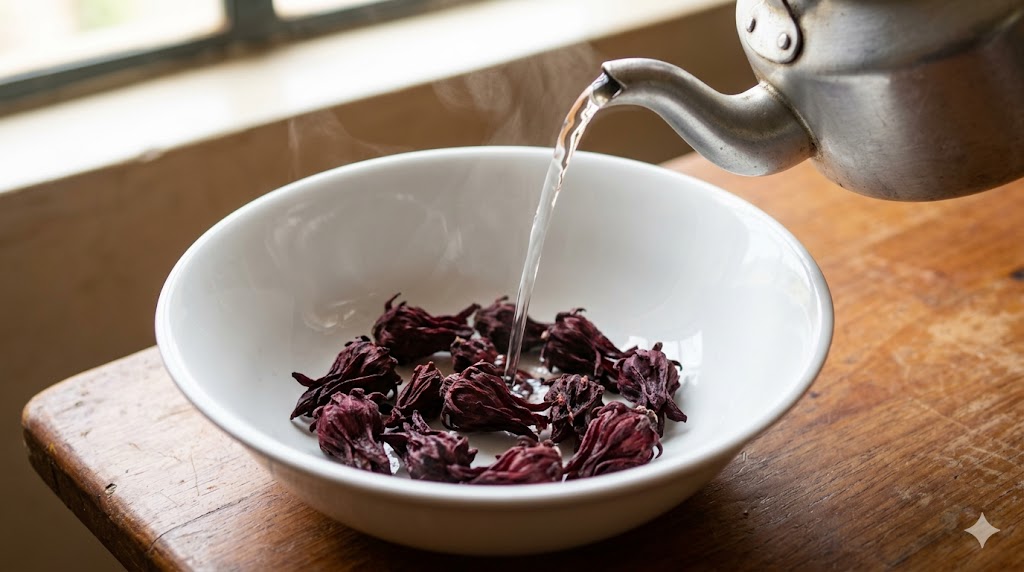
Place 10-15 dried hibiscus petals in a small bowl. Pour 250 ml (about 1 cup) of hot water over them. Let the petals steep for 10-15 minutes. The water will turn a deep red or purple colour.
Replace src with your image
Filter the Indicator Solution
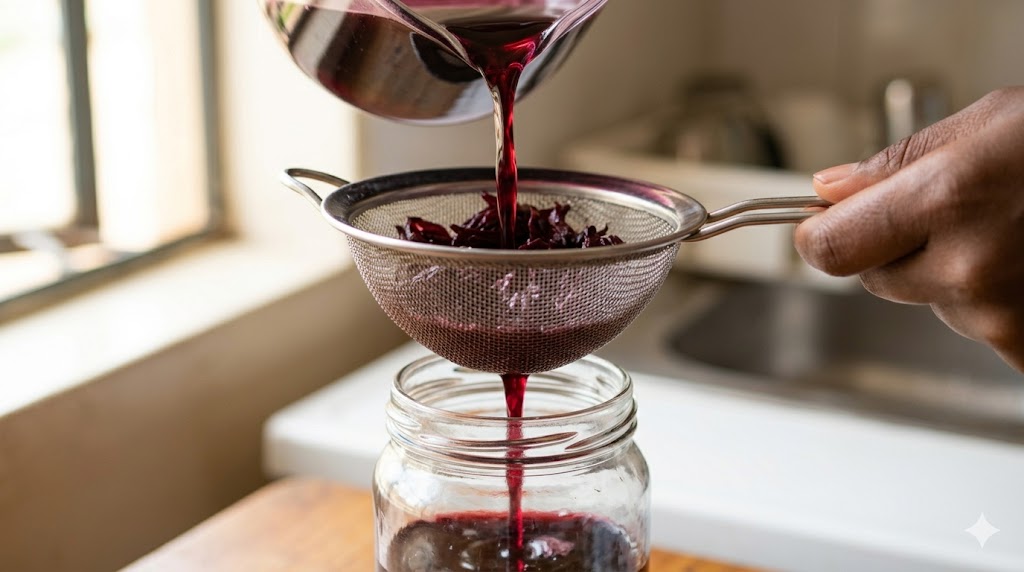
Using a strainer or clean cloth, filter the liquid into another container. Discard the petals. The remaining deep pink/purple liquid is your natural pH indicator. If the colour is light, add more petals and steep longer.
Replace src with your image
Prepare Test Samples
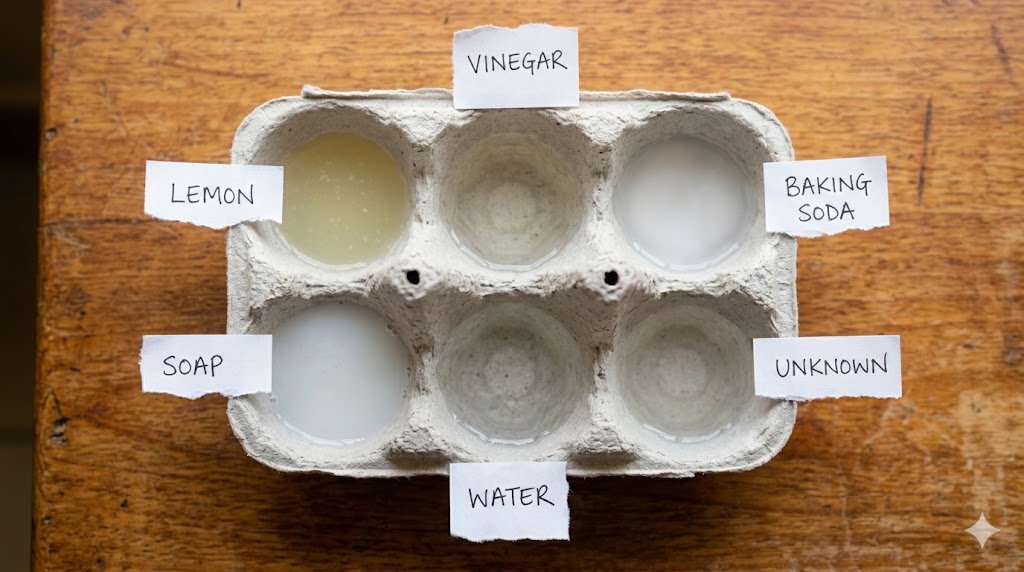
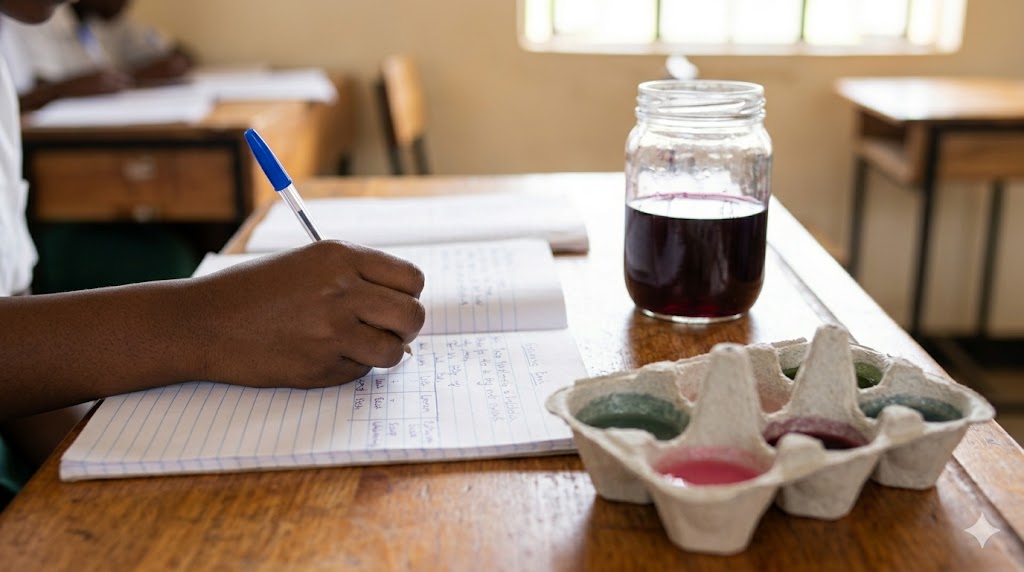
In separate small containers or egg tray sections, place small amounts (about 1 tablespoon) of each test substance: lemon juice, vinegar, baking soda solution, soap solution, and tap water. Label each container clearly.
Replace src with your image
Add Indicator to Each Sample
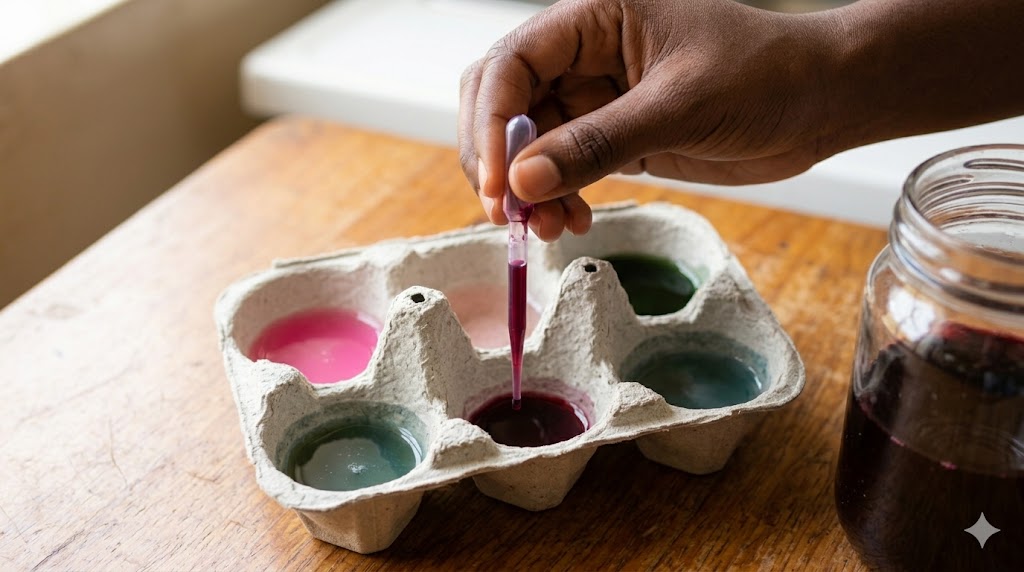
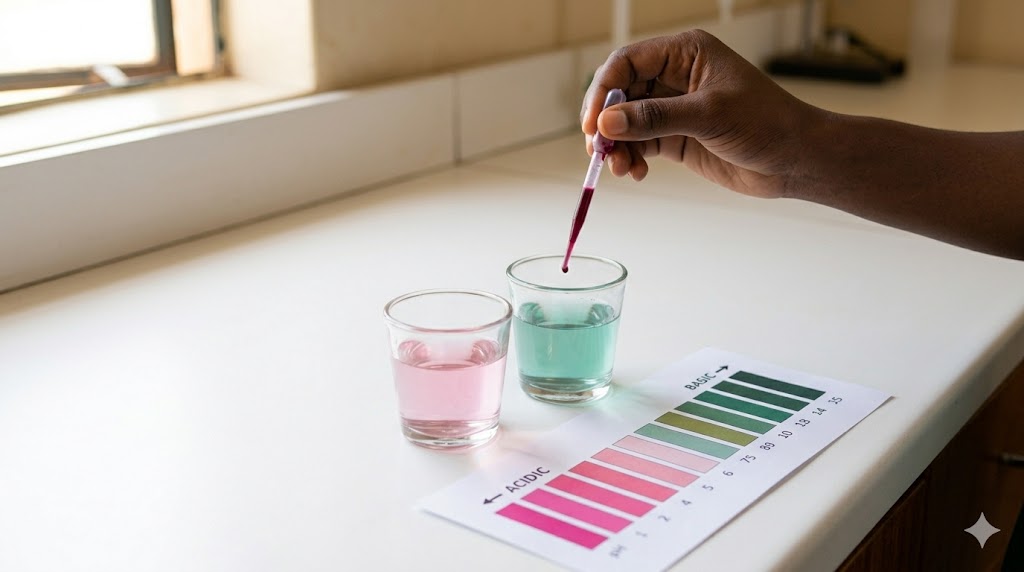
Add 5-10 drops of hibiscus indicator to each test container. Gently swirl or stir. Watch for colour changes immediately and after 30 seconds.
Replace src with your image
Record Colour Changes
Using the table below, record the resulting colour for each substance. Compare with known pH values to understand which colours indicate acids and which indicate bases.
Replace src with your image
Test Unknown Solutions (Challenge)
For bonus marks, ask a friend or teacher to provide an unknown household liquid (e.g., diluted detergent, fruit juice). Use your hibiscus indicator to determine whether it is acidic, basic, or neutral. Confirm using a commercial pH strip if available.
Replace src with your image
| Test Substance | pH Expectation | Indicator Colour | Acid / Base / Neutral |
|---|---|---|---|
| Lemon Juice | Acidic (pH 2-3) | __________ | __________ |
| Vinegar | Acidic (pH 2-3) | __________ | __________ |
| Baking Soda Solution | Basic (pH 8-9) | __________ | __________ |
| Soap Solution | Basic (pH 9-10) | __________ | __________ |
| Tap Water | Neutral (pH 7) | __________ | __________ |
| Unknown Sample | Unknown | __________ | __________ |
| Criteria | Exceeds (5) | Meets (4) | Approaching (3) | Below (2-1) |
|---|---|---|---|---|
| Indicator Preparation | Extract deep coloured, properly filtered. Consistent results across multiple trials. Petal ratio optimized. | Extract functional, slight colour variation. Properly filtered. | Extract weak colour, poorly filtered, needs repeat. | No functional indicator produced. |
| Experimental Testing | Tests 6+ substances including unknowns. Clear colour differentiation between acids and bases. pH range correctly identified. | Tests 4-5 known substances. Colour changes observed correctly. | Tests 2-3 substances only, some confusion in interpretation. | No clear results or incorrect testing procedure. |
| Data Recording & Analysis | Complete observation table. Accurate identification of acid/base. Explains anthocyanin colour shift scientifically. | Table mostly complete, basic analysis correct. | Incomplete records, partial understanding of pH concept. | No log or analysis. |
| Career & Real-World Connection | Identifies 2+ careers (food chemist, quality control analyst, lab technician). Explains industrial use of natural indicators. | Basic career link mentioned. | Minimal connection to real-world science. | No career connection. |
- Test the indicator's sensitivity by creating a dilution series of lemon juice (100%, 50%, 25%, 10%, 1%). Observe at what concentration the colour change becomes detectable.
- Compare hibiscus indicator with another natural indicator (e.g., red cabbage, butterfly pea flower). Create a poster showing colour ranges.
- Invite a chemistry teacher or lab technician to verify your results and sign a verification letter.
- Research and present on how food manufacturers use natural colour indicators to monitor acidity in products like yoghurt or fruit juice.
From Hibiscus to a Career
Understanding pH and indicators is fundamental to careers in food safety (testing acidity of juices and preserves), water quality testing (monitoring river pollution), pharmaceuticals (ensuring medicine stability), and agriculture (soil pH testing for optimal crop growth). In Kenya, companies like Kevian Kenya, Bidco Africa, and Kenya Bureau of Standards (KEBS) employ chemists who use similar principles daily. CBC's vision is to prepare you for these technical careers that solve local problems.
Save or Print This Guide
Take this experiment log and rubric to your lab session.