🌱 The Vertical Bag Garden
Grow sukuma wiki, spinach, and managu in a recycled gunny sack — zero cost, zero land required. SBA rubric included.
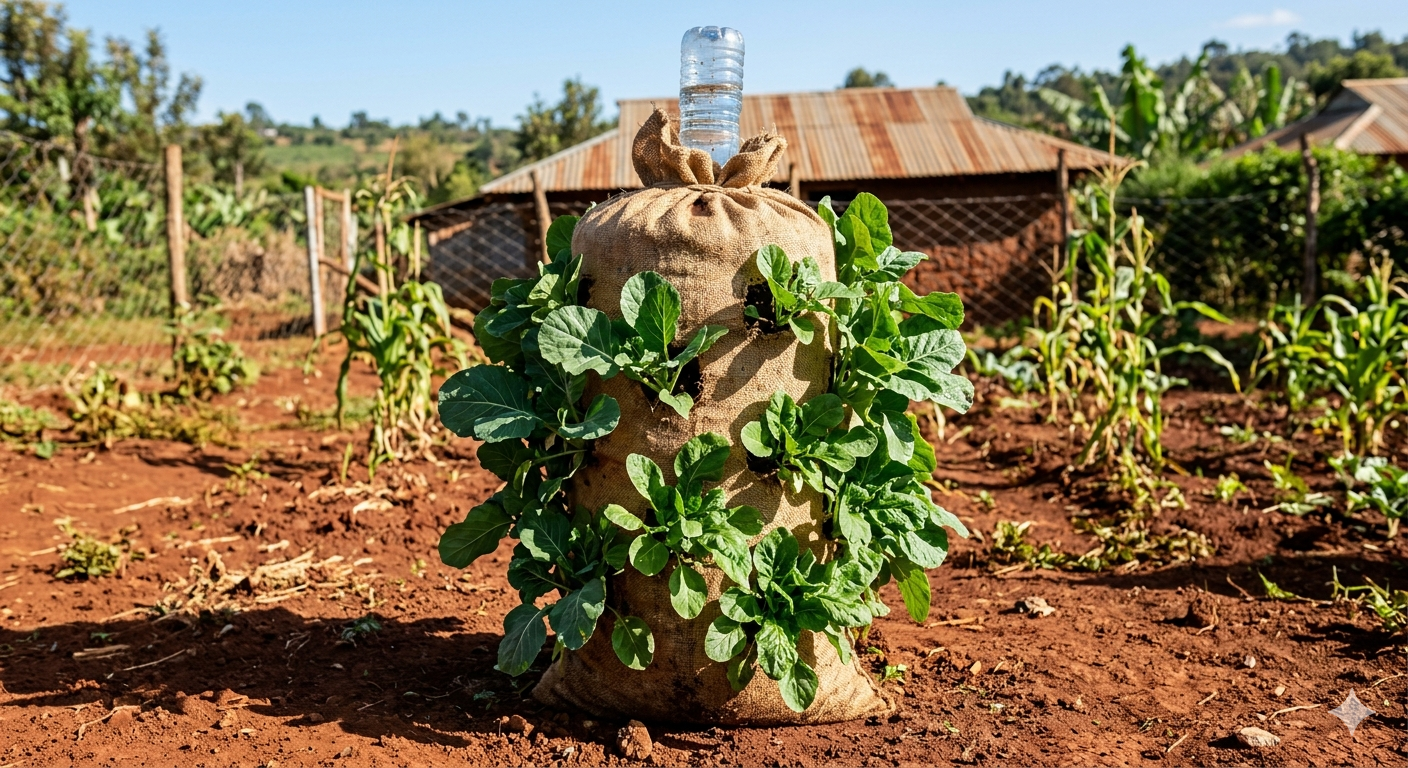
What is a vertical bag garden?
A vertical bag garden turns an ordinary gunny sack (used for maize, beans, or rice) into a space-saving vegetable garden. You fill the sack with soil, insert seedlings through holes cut in the sides, and water from the top. It’s perfect for small compounds, schoolyards, or even balconies — and costs nothing if you use kitchen waste as manure.
Materials needed (all free or recycled)
- 🧺 1 clean, used gunny sack (sisal or polypropylene)
- 🪣 Topsoil (about 2-3 basins) – from your compound or school garden
- 💩 Manure/compost (¼ of the soil mix) – use decomposed kitchen waste or cow dung
- ♻️ Empty 2L plastic bottle (for drip irrigation)
- 🌱 Seedlings: sukuma wiki, spinach, or managu (or seeds)
- 🔪 Small knife or scissors (to cut holes in sack)
- 💧 Water source
💰 Total cost: 0 KES (all items are household waste or free).
Step-by-step build guide
Follow these steps to create your garden. Take photos at each stage for your SBA portfolio.
Prepare the gunny sack
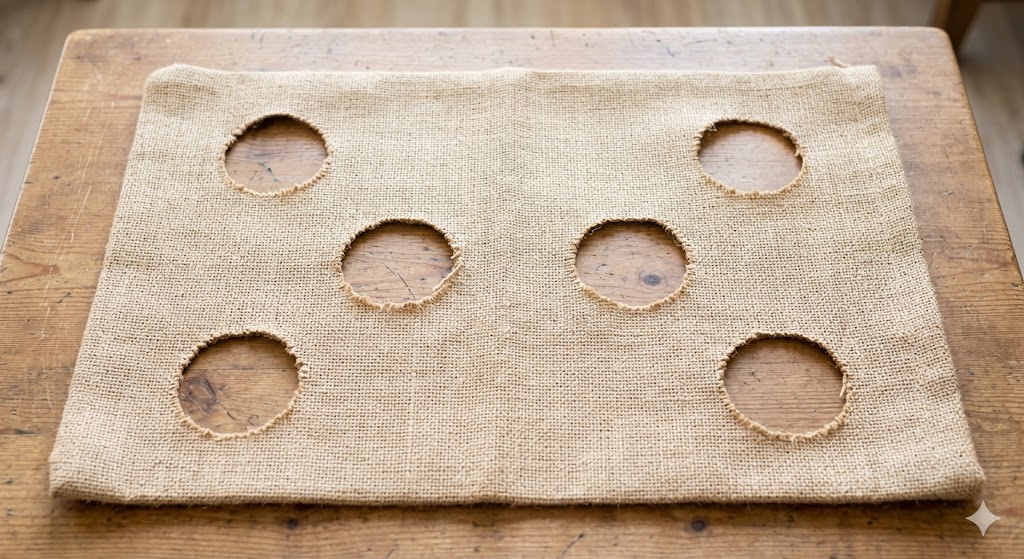
Turn the sack inside out and shake it clean. Using a knife, cut 5–6 holes (about 5cm wide) in a staggered zigzag pattern – three rows of 2 holes each. Make cuts only where you’ll plant.
Make the drip bottle
Take a 2L plastic bottle, poke 5–10 tiny holes in the cap using a heated needle or pin. Fill with water and screw the cap tightly. When you invert the bottle into the sack, it will slowly drip water to the roots.

Mix soil & fill the sack
Mix 3 parts topsoil with 1 part manure. Fill the sack halfway, then insert the drip bottle in the centre (neck up). Continue filling until the sack is about ¾ full. Tap the sack to remove air pockets.

Plant seedlings through holes
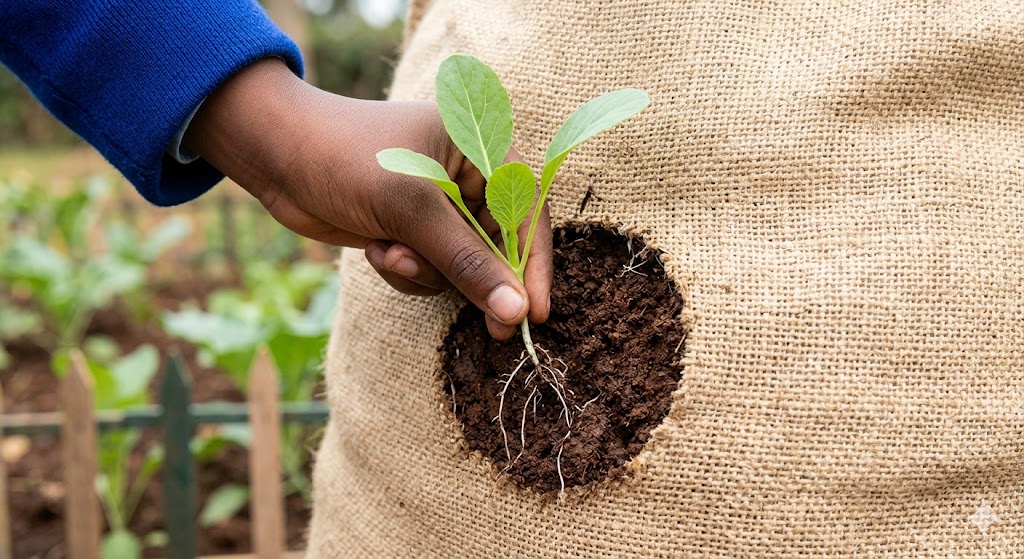
Gently push one seedling into each hole you cut earlier, making sure the roots reach the soil. For seeds, press 2–3 seeds per hole. Water immediately from the top to settle the soil.
Place in sunlight & maintain
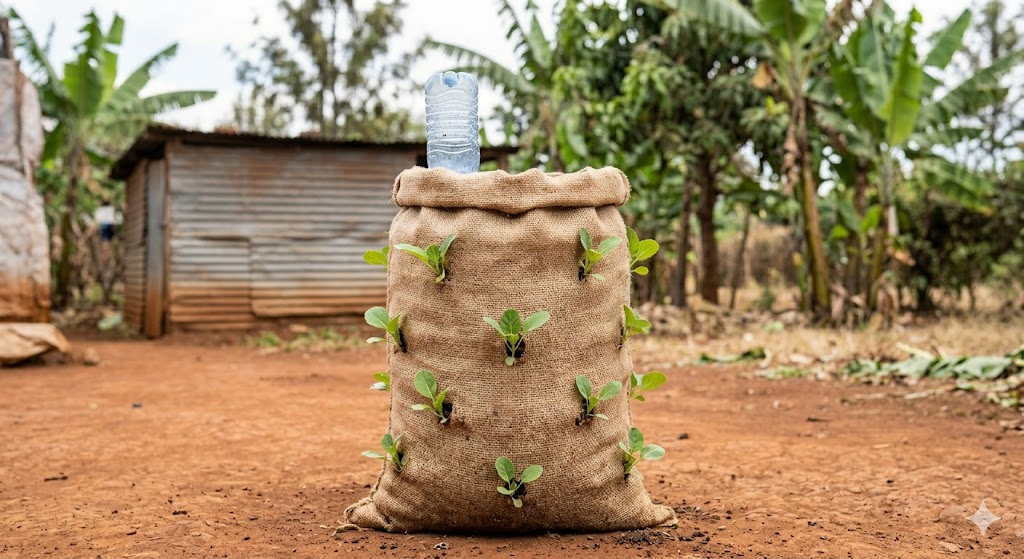
Stand the sack in a sunny area. Water every 2 days using the top and refill the drip bottle. After 2 weeks, you’ll see leaves emerging from the holes. Harvest outer leaves to encourage growth.

📊 KNEC SBA Rubric – Vertical Garden Project
Your teacher will assess using this rubric. Maximum score: 20 points.
| Criteria | Exceeds (5) | Meets (4) | Approaching (3) | Below (2-1) |
|---|---|---|---|---|
| Preparation & materials | All recycled materials, sack prepared perfectly, drip bottle works | Most materials recycled, minor issues with holes | Some materials missing, sack not well prepared | Improper preparation, missing key items |
| Construction process | Follows steps independently, neat cuts, stable structure | Follows with minimal help, stable | Needs frequent guidance, sack unstable | Unable to construct without direct help |
| Plant growth & maintenance | All plants healthy, consistent watering log, visible new growth | Most plants healthy, regular watering | Some plants weak, irregular care | Wilting or dead plants |
| Portfolio evidence | Timestamped photos at 4+ stages, written reflections, supervisor signature | 3 photos, brief reflection | 1-2 photos, no reflection | No evidence |
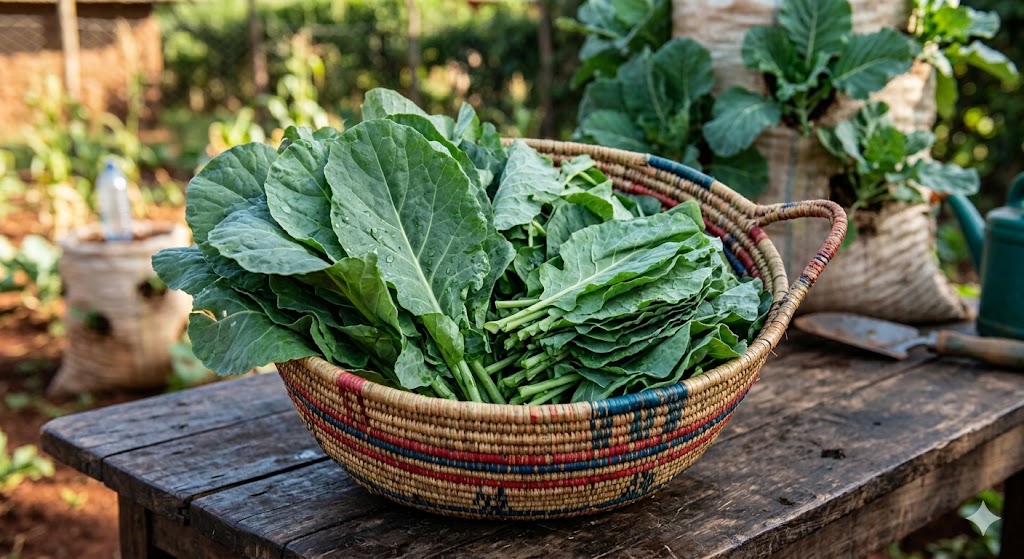
Project Gallery – add your own images
Replace these placeholders with actual photos of your vertical bag garden process.

📄 Need this offline?
Print or save as PDF to use without internet — perfect for rural schools.